
Why Is My Air Conditioner Not Cooling the House?
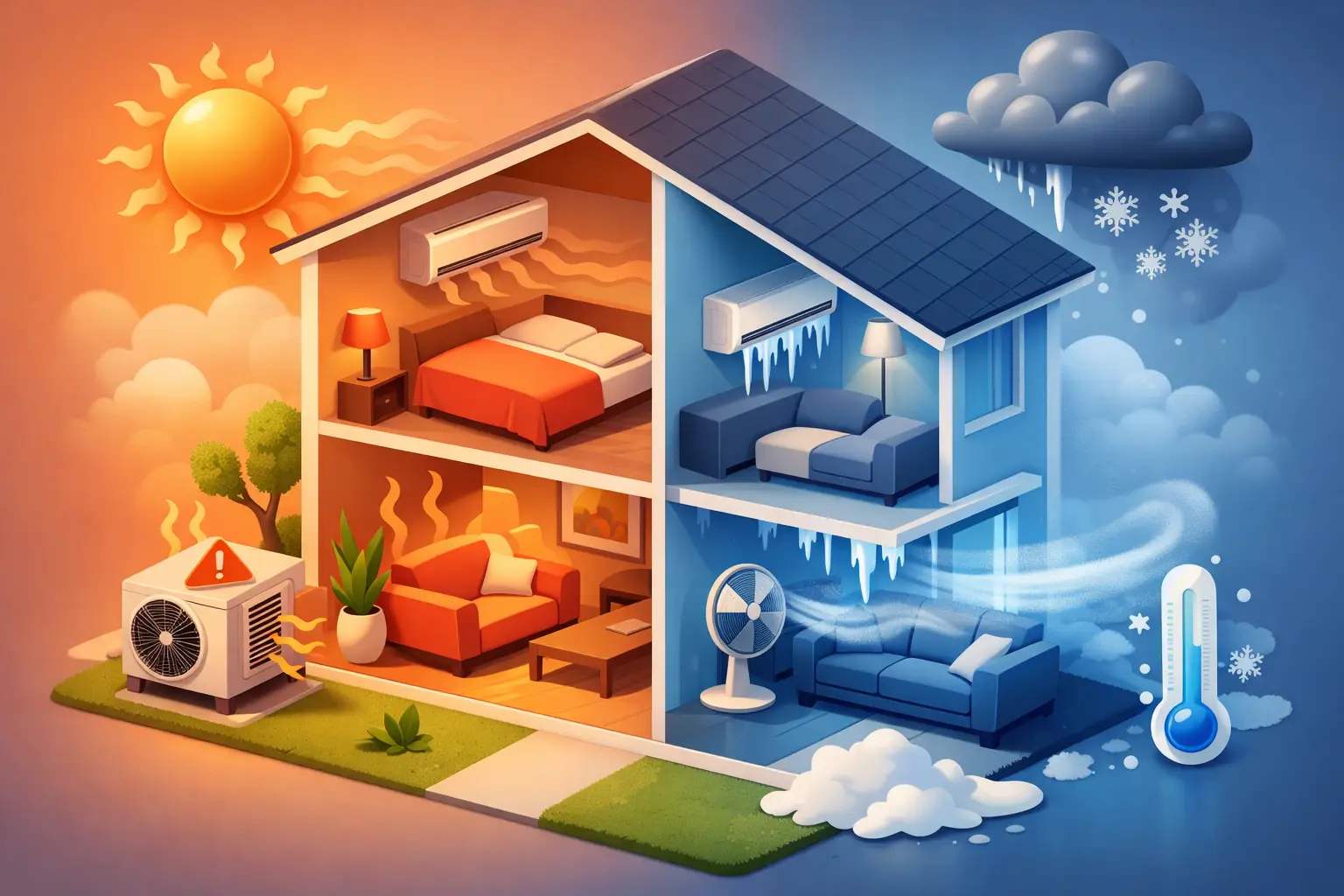
At 5 p.m. on a hot Omaha afternoon, a running AC system that is blowing lukewarm air can make a house feel miserable fast. The search for “air conditioner not cooling house” usually starts with one question: Is this a simple fix, or is the system about to fail? Sometimes the answer is a dirty filter or thermostat setting. Other times, the equipment needs prompt professional repair to prevent more damage and restore safe, reliable cooling.
Before assuming the whole system is done, pay attention to what it is doing. Is air coming from every vent but not getting cold? Is one room hot while the rest of the home is comfortable? Is the outdoor unit silent, frozen, or making an unfamiliar noise? Those details help narrow down the problem and help a technician diagnose it faster.
Why Your Air Conditioner Is Not Cooling the House
An air conditioner does more than blow cold air. It removes heat and humidity from inside your home, then releases that heat outdoors. When any part of that process is restricted – airflow, electrical power, refrigerant movement, or thermostat control – your home may not cool as it should.
The most common issue is restricted airflow. A clogged filter, blocked return grille, dirty indoor coil, or closed supply vents can keep cooled air from moving through the house. The system may run longer and longer without reaching the temperature on the thermostat. That extra runtime raises utility costs and puts unnecessary strain on equipment.
Not every cooling complaint means the AC itself is broken. On very humid Nebraska days, a system may run steadily while it removes moisture and catches up with heat coming through windows, attic spaces, and frequently opened doors. But if the indoor temperature continues climbing, the system is blowing warm air, or it cannot get close to its normal set temperature, it is time to investigate.
Safe Checks to Make Before Calling for AC Repair
A few simple checks can solve minor problems or give you useful information before service arrives. These checks should stay at the thermostat and around accessible equipment. Do not remove electrical panels, handle wiring, or attempt to add refrigerant yourself.
Check the Thermostat Settings
Set the thermostat to Cool and lower the setting at least three to five degrees below the current room temperature. Confirm the fan is set to Auto, not On. When the fan is set to On, it can keep circulating room-temperature air between cooling cycles, making it seem as if the AC is not cooling.
If the thermostat screen is blank or behaving oddly, replace the batteries if your model uses them. A smart thermostat can also lose its schedule, connection, or settings after a power interruption. If the thermostat says it is cooling but neither the indoor blower nor outdoor unit starts, a technician should check the controls and electrical components.
Look at the Air Filter
Pull out the filter and hold it up to a light. If you cannot see light through it, replace it with the correct size and type. A heavily loaded filter can reduce airflow enough to freeze the indoor coil, which stops the system from cooling properly.
Do not install a more restrictive filter simply because it sounds better. Some high-density filters can create airflow problems in systems not designed for them. For many homes, a quality pleated filter changed regularly provides a practical balance between air filtration and system performance.
Check Vents, Returns, and the Outdoor Unit
Make sure supply vents and return grilles are open and not blocked by furniture, rugs, curtains, or storage. Closing vents in unused rooms often seems like a way to save money, but it can disrupt airflow and increase pressure in the ductwork.
Outside, check that the condenser has room to breathe. Remove leaves, grass clippings, and loose debris from around it, keeping shrubs and other obstructions clear. Do not spray electrical components or bend the fins. If the outdoor unit is not running while the indoor fan is blowing, turn the thermostat off and arrange service.
Check for a Tripped Breaker
If the system stopped suddenly, check the electrical panel for a tripped breaker. You may reset a breaker once if it is clearly tripped. If it trips again, leave it off and call a licensed HVAC technician. Repeated breaker trips can point to a failing capacitor, wiring issue, compressor problem, or another electrical fault that should not be ignored.
Look for Ice and Water
Ice on the refrigerant line, indoor equipment, or outdoor coil is a warning sign, not a normal condition. Turn the cooling mode off and set the fan to On to help thaw the system. Do not chip ice away. Once it has thawed, the underlying cause still needs to be found, whether that is low airflow, a dirty coil, or a refrigerant problem.
Water around the furnace or air handler can also signal a clogged condensate drain. In Omaha’s humid summer weather, your AC produces a surprising amount of moisture. A blocked drain can trigger a safety switch that shuts the system down or can lead to water damage if it is not addressed.
Problems That Need a Professional Diagnosis
If the easy checks do not restore cooling, the problem is often inside the equipment. A licensed technician can test the system safely, identify the actual failure, and explain repair options without guessing.
Low Refrigerant or a Refrigerant Leak
Refrigerant is not a fuel that an air conditioner simply uses up. If levels are low, there is usually a leak. Adding refrigerant without finding and addressing the leak may provide temporary cooling, but it does not fix the reason the system lost charge. Low refrigerant can cause weak cooling, icing, long run times, and compressor damage.
Dirty Coils or a Failing Blower
The indoor evaporator coil absorbs heat from your home, while the outdoor condenser coil releases it. Dirt on either coil makes heat transfer less effective. A failing blower motor or weak capacitor can create similar symptoms because the system cannot move enough air across the indoor coil.
These are common maintenance-related issues, but they require the right tools and testing. Cleaning coils improperly can damage delicate fins or create drainage problems. A proper service visit checks airflow, temperatures, electrical readings, drains, and overall operation instead of treating only the obvious symptom.
Electrical and Compressor Issues
Capacitors, contactors, relays, wiring, and compressors all play a role in starting and operating your AC. You may hear humming, clicking, buzzing, or repeated short cycling when one of these components is failing. Some repairs are straightforward and cost-effective. A compressor issue on an older system may call for a more careful repair-versus-replacement conversation.
The right answer depends on the age and condition of the equipment, the repair cost, efficiency concerns, and whether other major components are showing wear. A trustworthy technician should give you clear numbers and practical options, not pressure you into replacement when a sound repair is available.
Omaha Heat Can Expose System and Home Problems
An AC unit that seemed fine in June can struggle during a stretch of 95-degree days. High outdoor temperatures make it harder for the condenser to release heat. Poor attic insulation, leaky ductwork, sun-facing windows, and undersized equipment can add to the load.
That does not automatically mean you need a bigger air conditioner. Oversized equipment can cool a home too quickly, shut off before removing enough humidity, and create uneven comfort. Proper sizing considers the home’s layout, insulation, windows, ductwork, occupancy, and cooling load. For rental properties and small businesses, the same principle applies: the quickest replacement is not always the right long-term solution.
When to Call for Help Right Away
Call for professional AC service promptly if you smell burning, see smoke, hear loud grinding or banging, find ice on the system, have repeated breaker trips, or notice water pooling near indoor equipment. Turn the system off if it is making severe noises or tripping electrical protection.
You should also schedule service when the system runs constantly, blows warm air, cools only part of the house, or cannot maintain a reasonable temperature. Waiting through a heat wave can turn a manageable repair into a larger failure, especially when a stressed compressor or blower continues operating.
For Omaha homeowners, landlords, and business owners, Midlands Heating & Air provides straightforward diagnostics, upfront pricing, and 24/7 emergency response when cooling cannot wait. The goal is simple: find what is wrong, explain what it takes to fix it, and get your space comfortable again without unnecessary upselling.
A hot house is disruptive, but you do not have to guess your way through it. Make the safe checks, protect the equipment from further strain, and get qualified help when the problem is beyond the basics. A clear diagnosis is the fastest path back to a cool, comfortable home.
[addtoany]RELAX! We offer flexible financing options!
