
Are Heat Pumps Good in Nebraska? A Straight Answer
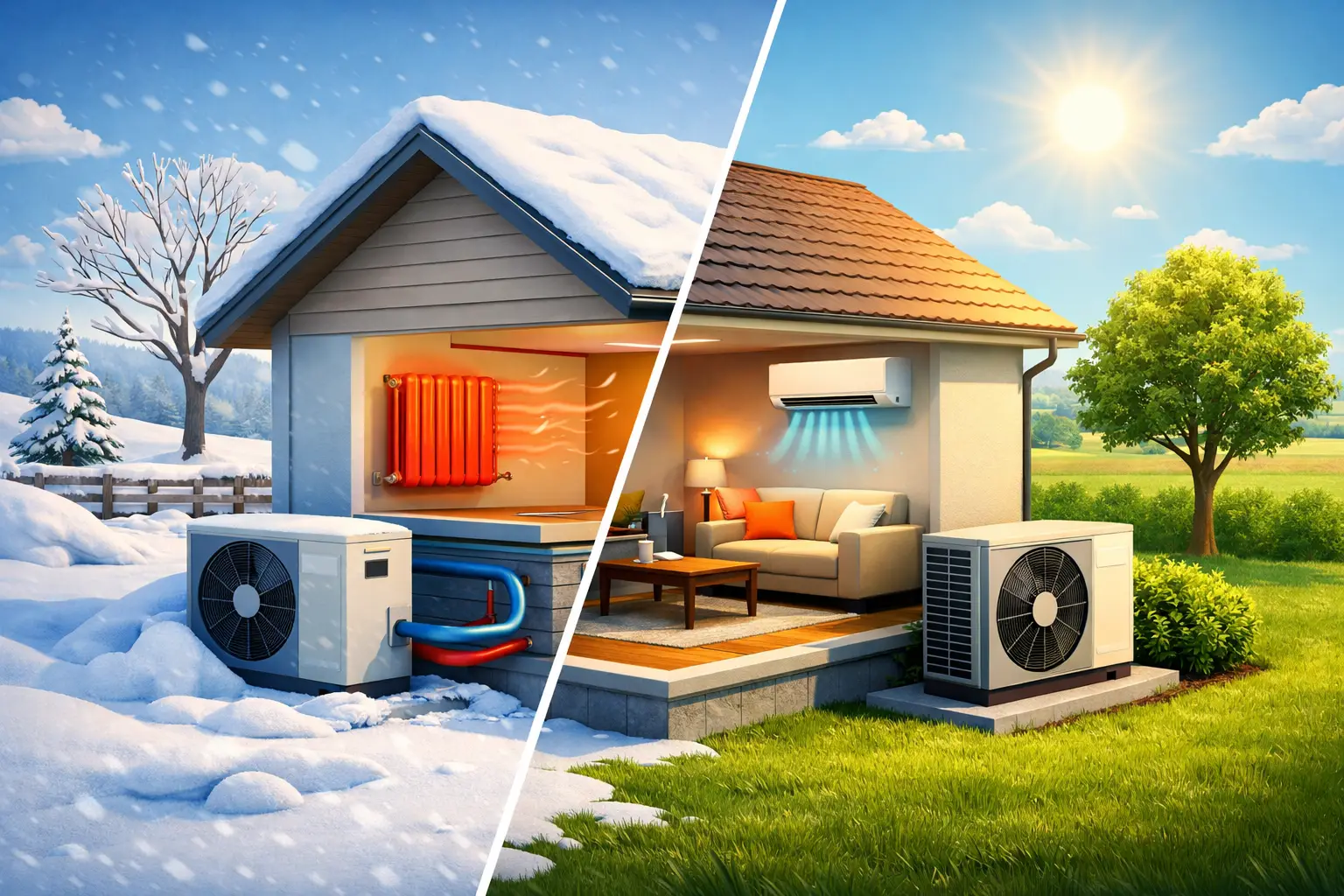
A heat pump can make a lot of sense in Omaha, but nobody wants a sales pitch when the real question is whether it will keep the house warm when Nebraska weather turns serious. So, are heat pumps good in Nebraska? Yes, when the system is selected, sized, and installed for our climate. The best answer depends on your home, your existing equipment, your utility costs, and how you want to handle the coldest days of the year.
A properly designed heat-pump system can provide efficient cooling all summer and dependable heat through much of the winter. It is not automatically the right replacement for every furnace, though. Straight answers and a look at the actual house matter more than a one-size-fits-all recommendation.
How a Heat Pump Handles Nebraska Weather
Unlike a furnace, a heat pump does not create heat by burning fuel. It moves available heat from outside air into your home during winter, then reverses direction to remove indoor heat during summer. That process is very efficient in moderate temperatures, which is why heat pumps can lower heating costs during much of a Nebraska winter.
The concern is understandable: What happens when the temperature drops below zero? Older heat pumps lost a great deal of capacity in deep cold, and that reputation still follows the technology. Modern cold-climate heat pumps perform far better than older models. Many can continue heating effectively well below zero, although their output and efficiency decline as outdoor temperatures fall.
That does not mean every heat pump should carry a Nebraska home alone. On the coldest days, a system may need auxiliary heat. Depending on the setup, that could be electric heat strips, an existing gas furnace, or another planned backup source. The goal is not to pretend winter is mild. It is to build a system that stays comfortable when it is not.
Are Heat Pumps Good in Nebraska for Every Home?
Heat pumps are a strong option for many homes, but the right configuration varies. A newer, well-insulated home with properly sized ductwork may be a good candidate for an all-electric cold-climate heat pump. A home with an aging gas furnace, existing ducts, and a family that wants extra confidence during a deep freeze may be better served by a dual-fuel system.
With dual fuel, the heat pump handles heating during milder and moderately cold weather. When temperatures reach a preset point, the gas furnace takes over. This approach lets the heat pump do the efficient day-to-day work while the furnace provides powerful backup when conditions are at their worst.
For homes without ductwork, room additions, finished basements, garages, and certain rental units, a ductless mini-split heat pump can also be practical. It gives you targeted heating and cooling without extending a full duct system. However, open floor plans and room layouts affect how evenly a ductless unit can serve the space, so placement matters.
The Benefits Homeowners Notice
The biggest advantage is that one system provides both heating and air conditioning. Instead of maintaining separate outdoor AC equipment and a heating-only system, a heat pump gives you year-round comfort from one central piece of equipment.
During spring and fall, when temperatures can swing from chilly mornings to warm afternoons, heat pumps are especially efficient. They can maintain comfort without the fuel use associated with firing a furnace. In summer, they cool much like a central air conditioner, and high-efficiency models can help manage cooling costs during Omaha heat waves.
Heat pumps also offer more even, steady heating than many homeowners expect. Rather than short blasts of very hot air, they typically run longer at lower output. When properly sized, that can reduce temperature swings and help avoid rooms that are too warm while others stay cold.
For homeowners considering future electrification, a heat pump can be a sensible long-term step. For landlords and property managers, it can simplify heating and cooling equipment in the right property while giving tenants efficient, controllable comfort. The decision still needs to account for the building itself, not just the equipment brochure.
The Trade-Offs to Consider Before Installing One
A heat pump is not a magic fix for high energy bills or an uncomfortable home. If your attic insulation is poor, windows leak, ducts are undersized, or airflow is restricted, new equipment will inherit those problems. It may run more than expected and deliver less comfort than it should.
Upfront installation cost can also be higher than replacing only an air conditioner or only a furnace. The final price depends on equipment efficiency, electrical capacity, duct modifications, whether a backup heat source is included, and the complexity of the installation. A fair proposal should clearly explain what is included and why, rather than hiding necessary work behind a low initial number.
Electric resistance backup heat deserves a careful conversation. It can protect comfort during extreme cold, but it is generally more expensive to operate than the heat pump itself. A thermostat and control strategy should be set up to use backup heat when needed, not unnecessarily. In some homes, keeping a gas furnace as backup is the more cost-conscious route.
Noise, maintenance, and expectations matter as well. Outdoor units make sound, defrost cycles are normal in cold, damp weather, and filters still need regular attention. A good system should not leave you wondering whether something is wrong every time it pauses or changes operating mode. Clear setup and homeowner education are part of a proper installation.
What Makes a Heat Pump Work Well Here
Nebraska heat-pump success comes down to details. Equipment capacity should be based on a real load calculation, not simply the size of the old system or a rough square-footage rule. Oversized equipment can short-cycle and struggle with humidity control. Undersized equipment can run constantly and rely too heavily on backup heat.
Ductwork needs attention, too. Leaky, restrictive, or poorly balanced ducts can waste the comfort and efficiency you are paying for. In some houses, correcting airflow is just as important as selecting the heat pump. A technician should also review the electrical panel, thermostat compatibility, refrigerant line condition, drainage, and outdoor-unit location.
The outdoor unit needs room for airflow and drainage. During winter defrost cycles, water must be able to drain away rather than refreeze around the base. Placement above expected snow accumulation and away from areas where drifting snow blocks airflow can prevent avoidable winter problems.
For a dual-fuel system, the changeover temperature should be based on the equipment, the home, and local operating costs. There is no single setting that is best for every Omaha household. The same is true for maintenance: a heat pump should be checked before the cooling season and again before winter use so performance, airflow, electrical components, and defrost operation are not left to chance.
When a Furnace May Still Be the Better Choice
Replacing a failed furnace with another high-efficiency gas furnace can still be the most practical decision. That may be true when a home already has a newer air conditioner, when budget limits a full system replacement, or when the property has heating demands that make a conventional furnace the simpler solution.
A furnace may also make sense for owners who prefer the familiar high-output heat of gas during severe cold. There is no reason to replace working equipment early just to follow a trend. The better decision is the one that provides safe, reliable comfort at a cost that fits your plans for the home.
Midlands Heating & Air approaches that decision without pressure. An honest evaluation should include repair options, the condition of your current system, expected remaining life, and whether a heat pump, furnace, or dual-fuel setup best fits the property.
A Practical Way to Decide
Start by looking at what you have now. Is your furnace failing often? Is the air conditioner near the end of its life? Are certain rooms consistently uncomfortable? Are utility bills rising without a clear reason? Those answers help determine whether a heat pump is an upgrade worth considering or whether a focused repair is the better next move.
Then ask for recommendations based on your home’s actual heating load, insulation, ducts, electrical service, and comfort priorities. You should understand how the system will perform in normal winter weather, what happens during a deep freeze, and what backup heat will cost to operate. Upfront pricing and plain language are not extras when you are making a major equipment decision.
A heat pump can be a dependable Nebraska choice, especially when it is designed for cold weather and supported by the right backup plan. The best system is the one that keeps your family, tenants, or customers comfortable without creating surprises when the forecast turns ugly.
[addtoany]RELAX! We offer flexible financing options!
