
Is a Ductless Mini Split for Garage Worth It?
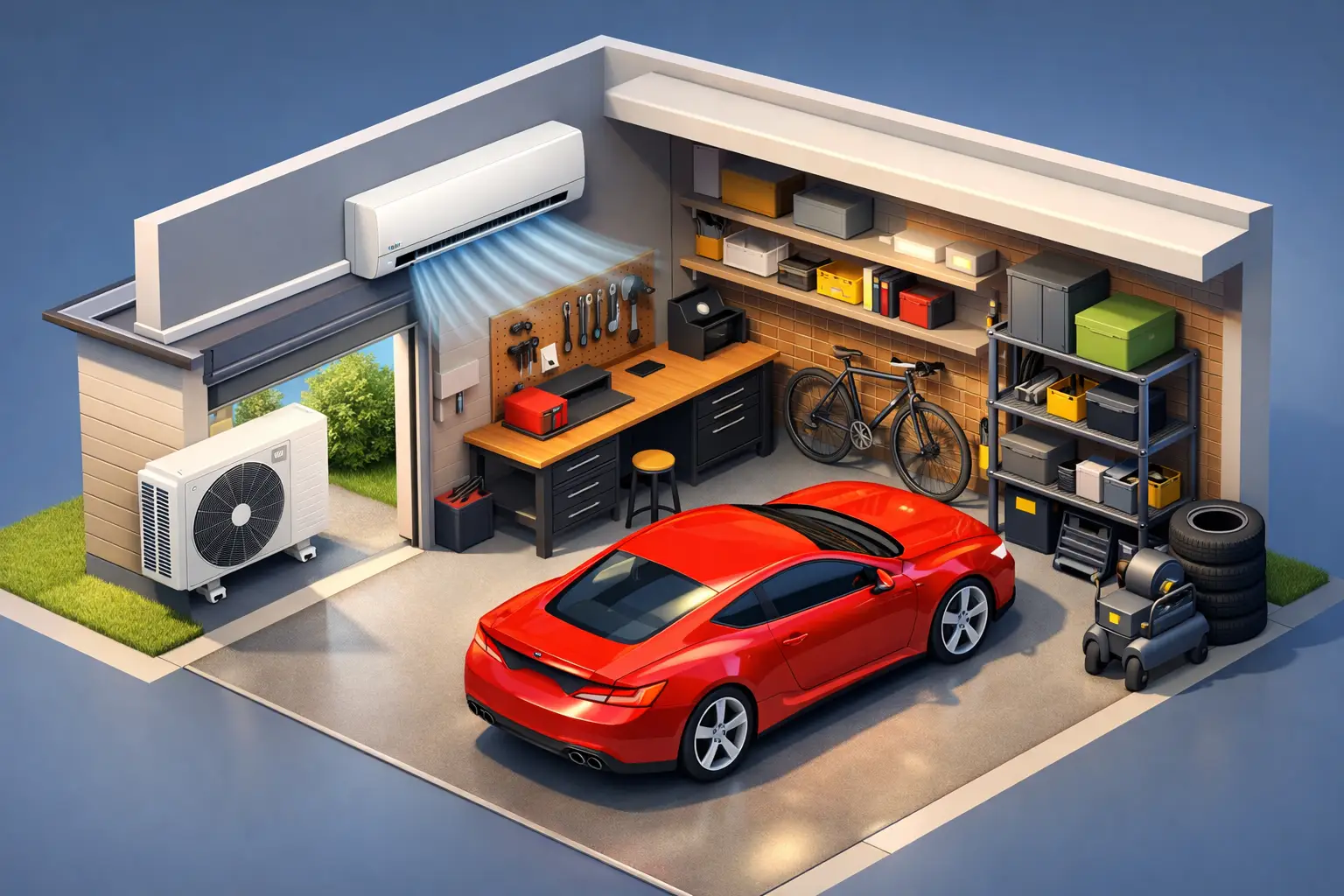
A garage that is 95 degrees in July and near freezing in January is not much use for projects, workouts, storage, or a workshop. A ductless mini split for garage spaces can change that without extending your home’s existing ductwork or asking your central system to handle a room it was never sized for.
For Omaha homeowners, the question is rarely whether a garage can get uncomfortable. Nebraska weather answers that quickly. The better question is whether a mini-split is the right fix for your garage, how large it should be, and what has to happen before installation for it to perform well through both heat waves and deep freezes.
Why a ductless mini split for a garage works
A ductless mini-split has two main components: an outdoor condenser and an indoor wall-mounted, ceiling-mounted, or floor-mounted air handler. Refrigerant lines and electrical wiring run between them through a small opening in the exterior wall. The indoor unit delivers heating and cooling directly to the garage without requiring ducts.
That direct approach solves several common garage-comfort problems. Many attached garages have no supply vents at all. Others have one small vent that does little more than waste conditioned air, especially when the garage door opens repeatedly. Adding conventional ductwork may require major framing, ceiling access, and changes to a system that is already properly sized for the house.
A mini-split gives the garage its own thermostat and its own temperature setting. You can keep the space cooler while working on a vehicle in summer, warm it before a weekend project in winter, or maintain a moderate temperature to protect paints, tools, batteries, and stored items. It is also typically much quieter than a window unit, portable heater, or older unit heater.
For a finished garage gym, hobby room, home office, or workshop, that independent control is often the biggest advantage. You are not heating or cooling the entire home differently just to make one room usable.
Start with insulation, not equipment size
A mini-split cannot overcome an uninsulated garage door, open wall cavities, air leaks, and a bare ceiling with no insulation. It may still run, but it will run longer, cost more to operate, and struggle during extreme temperatures.
Before choosing equipment, look at the garage as a whole. The garage door should be insulated and weather-stripped. Exterior doors need solid seals. Walls shared with the house and ceilings below living space should be properly insulated. If the garage is attached, the wall between the house and garage must also meet fire-safety requirements, so any modifications should be handled correctly.
The ceiling deserves special attention when there is attic space above it. Heat rises in winter, and a poorly insulated ceiling lets much of that heat disappear into the attic. In summer, attic heat can turn the garage into an oven before the afternoon even begins.
Air sealing matters too. Small gaps around the overhead door, service door, windows, and utility penetrations add up. Addressing those issues may allow a smaller system to do the job and will make any heating and cooling option more effective.
Proper sizing matters more than square footage alone
It is tempting to choose a mini-split by garage square footage alone. That can provide a rough starting point, but it is not enough for a reliable recommendation. A two-car garage may need very different capacity depending on insulation, ceiling height, windows, door use, sun exposure, and whether it is attached or detached.
A well-insulated attached two-car garage used occasionally may need far less heating capacity than a detached workshop with a high ceiling and three overhead doors. A garage used for welding, woodworking, automotive work, or other activities that create heat, dust, fumes, or moisture may need additional ventilation planning as well.
An oversized unit is not automatically safer. It can cycle on and off too often, which reduces comfort and may limit humidity control during cooling season. An undersized system will run continuously on the hottest and coldest days without reaching the temperature you want. A qualified technician should evaluate the actual space and discuss how you plan to use it before recommending a capacity.
In Omaha, heating performance deserves as much attention as cooling capacity. Many modern cold-climate mini-splits can provide useful heat well below freezing, but model selection matters. The unit should be selected with its low-temperature capacity in mind, not just its advertised cooling rating.
Where should the indoor and outdoor units go?
The indoor air handler needs open space to move air across the garage. A high wall is common, but it should not blow directly onto a workbench where you stand for long periods or toward shelves that block airflow. It also needs to remain accessible for cleaning filters and future service.
The outdoor condenser needs a stable pad or properly designed wall bracket, adequate clearance, and protection from damage. In a Nebraska winter, snow and ice management are real considerations. The unit should not sit where drifting snow, roof runoff, or plowed snow can block airflow or damage the equipment.
Line routing matters as well. Shorter, cleaner refrigerant-line runs are generally easier to service and look better, but the best location depends on the garage layout and the exterior of the home. An installer should also plan condensate drainage for cooling season so water does not create a slippery spot or drain against the foundation.
What a garage mini-split will not solve
A mini-split is excellent for temperature control, but it is not a replacement for safe ventilation. Do not run a vehicle, gas-powered equipment, or fuel-burning heater in an enclosed garage because the mini-split is operating. Carbon monoxide and combustion fumes require proper safety practices and ventilation, not recirculated heated air.
It also will not remove heavy shop dust, chemical vapors, or exhaust fumes. If your garage is used for woodworking, painting, automotive work, or similar projects, discuss ventilation and filtration separately. Protecting the indoor unit from excessive dust may require a different placement, more frequent filter cleaning, or additional equipment.
For a garage that is only used to park cars and store seasonal items, a full heating and cooling system may not be the best value. Sometimes insulation improvements, a unit heater, or limited-use supplemental heat better matches the owner’s goals and budget. The right choice depends on how often you use the space and what temperature you actually need.
Installation details that should not be skipped
A proper mini-split installation is more than mounting equipment and turning it on. The electrical circuit must be correctly sized, refrigerant lines need to be pressure-tested and evacuated, condensate must drain properly, and the system needs to be commissioned according to manufacturer specifications.
Permits and code requirements may apply, particularly for electrical work and equipment placement. A licensed HVAC contractor can identify those requirements and make sure the installation is safe, clean, and serviceable. This is especially important in an attached garage, where equipment location, wall penetrations, and electrical details should be handled with care.
Ask for straightforward answers about equipment options, expected performance in cold weather, warranty coverage, maintenance needs, and the full installed price. A good recommendation should explain the trade-offs instead of treating the biggest system as the only solution.
Maintenance keeps the system dependable
Garage air is usually dirtier than indoor household air. Sawdust, pet hair, leaves, road dust, and vehicle-related debris can collect on filters and coils faster than expected. Check the washable filters regularly, especially if the garage is used as a workshop, and clean them as the manufacturer directs.
Annual professional maintenance is a practical way to catch drainage problems, electrical concerns, low airflow, and outdoor-coil buildup before peak heating or cooling season. It also gives you a chance to confirm the unit is still operating efficiently when Omaha weather is putting it to work.
Midlands Heating & Air can assess the garage, insulation, electrical access, and your comfort goals before recommending a ductless option. You should get clear sizing guidance and upfront pricing, not a high-pressure pitch.
A comfortable garage can become one of the most useful spaces in the house. Start by tightening up the building, then choose equipment that fits the way you truly use it – whether that means steady year-round comfort or simply taking the edge off Nebraska’s worst weather.
[addtoany]RELAX! We offer flexible financing options!
