
Furnace Replacement Cost Omaha Homeowners Can Expect
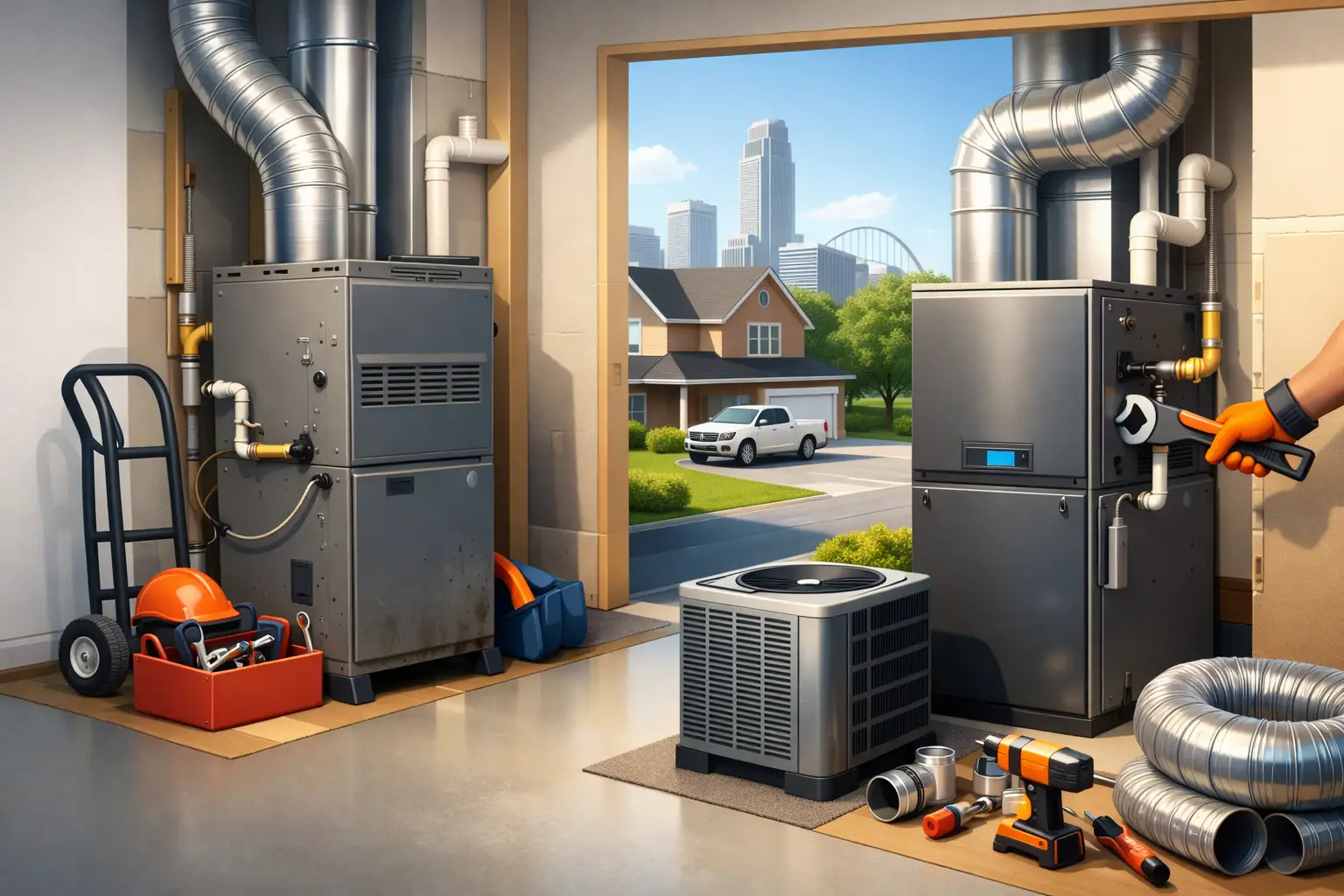
A furnace quitting during an Omaha cold snap is more than an inconvenience. It can put your home, pipes, tenants, pets, and family routine at risk. When replacement becomes the practical choice, most people want a straight answer first: What will this cost, and what am I actually paying for?
Furnace replacement cost Omaha homeowners face varies because every home, existing system, and installation is different. A basic replacement using a properly sized standard-efficiency gas furnace may cost several thousand dollars, while a high-efficiency system with ductwork changes, venting updates, or electrical work can cost significantly more. The right number comes from an in-home evaluation, not a one-size-fits-all quote over the phone.
Typical Furnace Replacement Cost in Omaha
For many Omaha-area homes, a complete furnace replacement commonly falls in the range of roughly $4,000 to $9,000 installed. That broad range reflects the furnace itself, labor, removal of old equipment, startup, testing, and the details needed to install the new unit safely.
Some projects land below that range when the existing setup is straightforward and the replacement is like for like. Others can reach $10,000 or more, particularly when a home needs a premium variable-speed furnace, high-efficiency venting changes, major duct modifications, a new thermostat, or corrections to older installation problems.
The lowest bid is not always the lowest long-term cost. A furnace that is improperly sized or installed without addressing airflow can run poorly, wear out earlier, and leave rooms unevenly heated. On the other hand, the most expensive equipment is not automatically the best fit. The goal is dependable heat, safe operation, and operating costs that make sense for your home and budget.
What Changes Your Furnace Replacement Cost Omaha Quote
A clear estimate should explain the equipment choice and the work required to install it. Here are the major factors that move the final price.
Furnace efficiency and features
Standard-efficiency furnaces typically cost less upfront and may be a sensible option in certain homes. High-efficiency furnaces cost more initially but use less fuel, which can reduce winter utility bills. Whether the savings justify the higher purchase price depends on your household’s usage, how long you expect to stay in the home, and the condition of the rest of the HVAC system.
Single-stage furnaces are generally the most economical equipment option. Two-stage and variable-speed models can offer quieter operation, more consistent temperatures, and better airflow. Those comfort benefits matter to many Omaha homeowners, but they should be discussed plainly rather than sold as a must-have for every house.
Proper sizing
Furnace size is measured in BTUs, but bigger is not better. An oversized furnace may heat the house too quickly, then shut off repeatedly. That short cycling can create temperature swings and unnecessary wear. An undersized furnace may struggle when Nebraska temperatures drop hard.
A licensed technician should consider the home’s square footage, insulation, windows, layout, ductwork, and heating load before recommending a size. Replacing an old furnace with the same BTU rating may be appropriate, but it should not be assumed. Improvements to insulation or changes to the home can alter what it needs.
Ductwork, airflow, and installation access
A furnace cannot perform well if the ducts are leaking, undersized, damaged, or poorly designed. Some replacement projects require only minor adjustments. Others need return-air improvements, duct repairs, or modifications to improve airflow to rooms that stay cold.
Access also affects labor. A furnace located in an open basement mechanical room is typically simpler to replace than one in a tight attic, crawl space, or finished area. If old equipment must be carefully removed through narrow spaces, the installation can take more time.
Venting, gas, electrical, and drainage updates
Newer high-efficiency furnaces often require different venting and a condensate drain. An older home may also need gas-line, shutoff, electrical, or code-related updates before a new furnace can be installed safely. These are not flashy upgrades, but they are part of doing the job right the first time.
A trustworthy contractor will identify these needs before work begins and include them in the estimate whenever possible. If an unknown condition is discovered after equipment is removed, the technician should explain the issue, options, and cost before proceeding.
Thermostats and system compatibility
A new furnace may work with your existing thermostat, but not always. Smart thermostats and advanced furnace controls can improve scheduling and comfort, yet they need to be compatible with the equipment and wiring. If the furnace and air conditioner share a blower, the technician should also confirm the system works together correctly.
What a Complete Replacement Should Include
Comparing quotes can be difficult when one estimate has a low equipment price but leaves out necessary work. Ask what is included, not just what brand or efficiency rating is listed.
A complete furnace replacement should generally include removal and responsible disposal of the old furnace, installation of the new equipment, necessary connections, startup, safety checks, and testing of heat and airflow. The estimate should also state whether permits, thermostat work, venting, drain work, duct modifications, and warranties are included or separate.
Before approving the work, ask how the company will protect your home, how long the installation should take, and what happens if there is a problem after the job is complete. Clear answers matter. You should not have to chase down a contractor when the weather is below zero.
Repair or Replace: When Does Replacement Make Sense?
Replacement is not the answer to every furnace problem. A newer unit with a failed igniter, pressure switch, capacitor, or blower component can often be repaired for far less than the cost of new equipment. A no-pressure recommendation starts with diagnosing the actual failure.
Replacement becomes more reasonable when the furnace is near or beyond its expected service life, has frequent breakdowns, needs a costly major repair, or is creating ongoing comfort and safety concerns. A cracked heat exchanger deserves immediate attention. It can allow combustion gases into the air stream and may make replacement the safer choice.
For landlords and property managers, the decision also involves reliability. An aging furnace that repeatedly fails can create tenant disruption, emergency calls, and uncertainty during the coldest weeks of the year. A planned replacement is often easier to budget and schedule than a midnight failure.
A helpful way to evaluate the choice is to compare the immediate repair cost, the furnace’s condition, the likelihood of another repair soon, and the efficiency improvement from a new system. There is no benefit in replacing a furnace that has a sensible, durable repair available. There is also little value in pouring money into a unit that has become unreliable.
How to Budget Without Rushing the Decision
If the furnace is still operating safely, get an estimate before it becomes an emergency. Planned replacement gives you time to compare efficiency levels, consider financing, and choose an installation date that works for your household or tenants.
When heat is out, the decision window can feel much smaller. In that situation, ask for upfront pricing and a clear explanation of available options. A reputable HVAC company can explain the differences between a practical replacement and a higher-efficiency upgrade without using fear or aggressive sales tactics.
At Midlands Heating & Air, the focus is on identifying what your home needs, explaining the price clearly, and giving you room to decide. Whether the right answer is repair or replacement, you deserve a licensed Omaha technician who respects your home and your budget.
A furnace replacement is a significant expense, but it should also bring confidence when the next deep freeze arrives. Start with a thorough evaluation, ask what is included, and choose the option that delivers safe, dependable heat without paying for features your home does not need.
[addtoany]RELAX! We offer flexible financing options!
