How Often Should Your Furnace Be Serviced?
A furnace can seem perfectly fine right up until the first real Omaha cold snap puts it under pressure. Then a small issue – a dirty flame sensor, worn blower part, or weak ignition component – becomes a no-heat call on a freezing night. So, how often should furnace be serviced? For most homes, the straightforward answer is once a year, ideally before the heating season begins.
Annual service is not about selling work your furnace does not need. It is about catching normal wear, confirming safe operation, and giving the system its best chance to heat reliably when Nebraska weather turns serious.
How Often Should Your Furnace Be Serviced?
Most gas and electric furnaces should receive a professional maintenance visit every 12 months. Fall is usually the best time, before your system begins running day after day. Scheduling early also gives you more flexibility than waiting until the first hard freeze, when repair schedules tend to fill quickly.
A yearly tune-up matters whether your furnace is brand-new or nearing replacement age. Newer equipment benefits from clean components, proper adjustments, and documented maintenance. Older equipment needs a closer look because parts can wear gradually and efficiency can slip without obvious warning signs.
If you have a heat pump that provides your primary heat, it should also be professionally checked annually. Because heat pumps work in both heating and cooling modes, many Omaha homeowners choose service before winter and again before summer.
When a Furnace May Need Service More Than Once a Year
Once a year is the normal baseline, but some homes and properties need more attention. A second visit can make sense when a furnace runs heavily, serves a busy rental property, or has a history of repairs.
Consider more frequent checks if you have any of the following:
- A furnace that is 12 to 15 years old or older
- Multiple pets, significant dust, remodeling debris, or smoking indoors
- A large household where the system runs constantly
- Tenants who may not report small comfort changes right away
- Prior problems with ignition, airflow, overheating, or carbon monoxide concerns
- A manufacturer warranty or maintenance plan that requires regular documented service
For landlords and property managers, planned maintenance is often easier and less expensive than a midwinter emergency. It gives you a chance to address a developing problem while coordinating access with tenants, rather than scrambling after the heat goes out.
Why Annual Furnace Maintenance Is Worth It
A furnace tune-up is preventative care, but it is also a safety check. Gas furnaces burn fuel to create heat, so the system needs proper combustion, venting, and electrical operation. A trained technician looks for conditions that could affect safety or performance before they become larger problems.
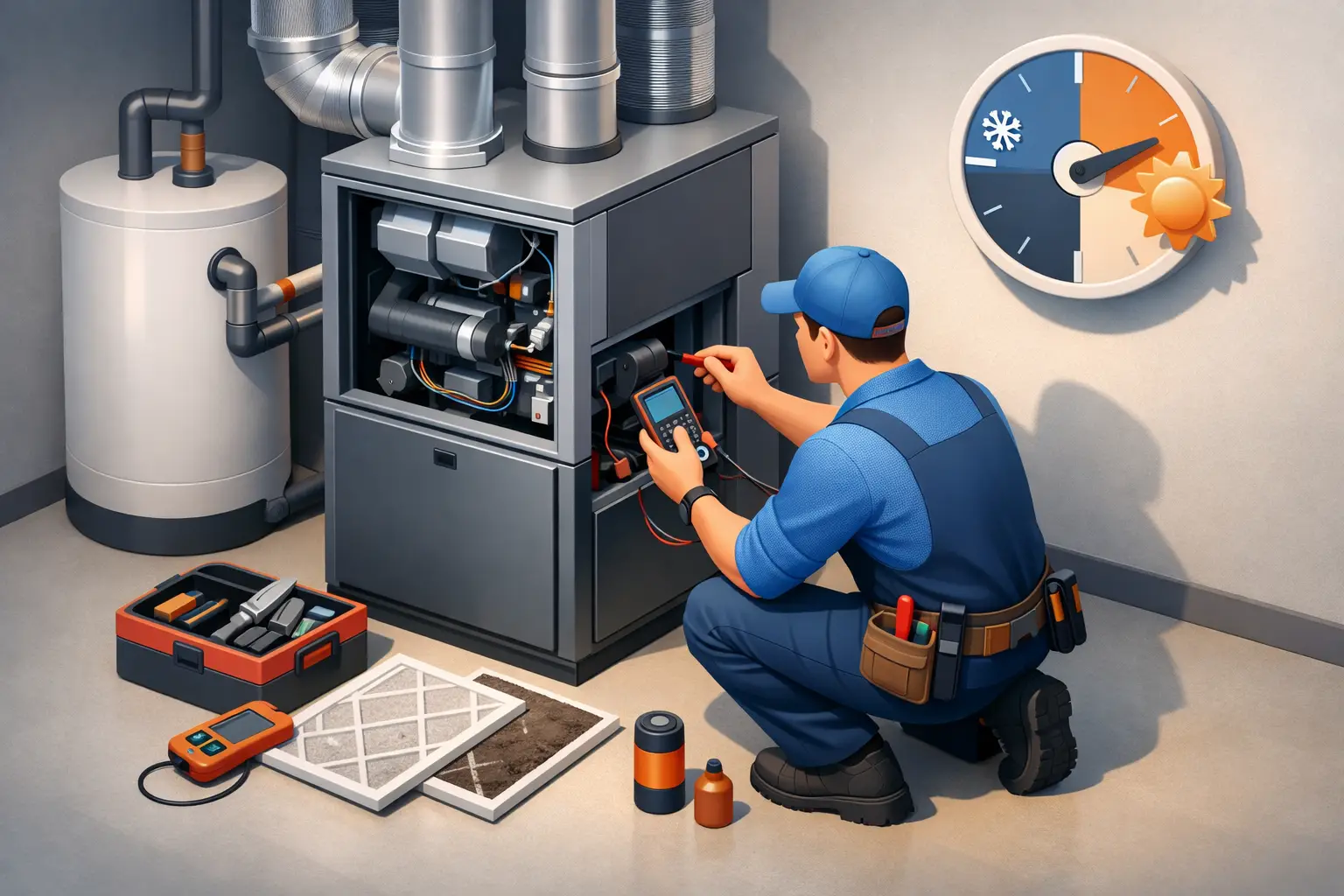
During a typical professional service visit, the technician may inspect the heat exchanger, burners, ignition system, flame sensor, venting, electrical connections, blower components, condensate drainage on high-efficiency models, thermostat operation, and air filter condition. They also check how the furnace starts, runs, and shuts down.
Not every furnace needs parts during maintenance. In fact, a good service visit should distinguish between normal upkeep, a repair that needs attention now, and an item worth monitoring. Clear explanations and upfront pricing matter here. You should understand what was found, why it matters, and what your options are before approving additional work.
Better Reliability During a Deep Freeze
Furnaces work hardest when outdoor temperatures drop sharply. A component that performs adequately on a mild November day may fail after hours of nonstop operation in January. Cleaning and testing key parts before winter reduces the risk of being surprised by a no-heat situation.
Maintenance cannot guarantee that a part will never fail. Mechanical equipment can break unexpectedly. But it can reduce the chances of avoidable breakdowns caused by dirt buildup, loose wiring, restricted airflow, or parts that were already showing signs of trouble.
Safer Operation
A cracked heat exchanger, venting issue, or combustion problem is not something to ignore. These concerns are not the most common outcome of a service visit, but they are exactly why annual professional inspection is valuable for gas-fired equipment.
Homeowners should keep working carbon monoxide detectors near sleeping areas and on each level of the home, following the detector manufacturer’s placement instructions. If a detector alarms, you smell gas, or anyone in the home has symptoms such as dizziness, headaches, or nausea, leave the area and contact the appropriate emergency services or utility provider. Do not try to diagnose a possible gas or carbon monoxide issue yourself.
Lower Energy Waste
A furnace with restricted airflow or dirty operating components may run longer than necessary to meet the thermostat setting. Annual maintenance helps identify problems that can increase utility costs, including clogged filters, weak airflow, thermostat issues, and blower problems.
There is a practical limit to what a tune-up can do. Maintenance will not make an outdated furnace perform like a new high-efficiency system, and it will not solve insulation gaps, leaky ductwork, or an incorrectly sized unit. Still, keeping the equipment clean and properly adjusted helps it operate as efficiently as its design allows.
What You Should Do Between Service Visits
Professional maintenance handles the technical work, but homeowners can help protect the system throughout the year. The most useful habit is checking the air filter regularly. A clogged filter restricts airflow, can make rooms less comfortable, and may contribute to overheating or shutdowns.
Check your filter monthly during the heating season. Replace it based on the filter type, your household, and how dirty it looks. Homes with pets, allergies, or high furnace use may need more frequent changes than the package’s maximum timeline suggests.
Keep supply vents and return grilles open and clear of furniture, rugs, boxes, and drapes. Avoid closing multiple vents in an attempt to force more heat into one room. That can create airflow and pressure problems for the system. It is also smart to keep the area around the furnace accessible and free of stored items, especially anything flammable.
Pay attention to changes in performance. New rattling, banging, squealing, short cycling, cool air from the vents, uneven heat, or an unexplained jump in energy bills are all good reasons to call before the annual appointment. Waiting rarely makes a mechanical issue less expensive.
Signs You Should Schedule Furnace Service Now
Do not wait for routine maintenance if your furnace is showing warning signs. A furnace that does not start, repeatedly shuts off, blows cold air, makes loud new noises, or leaves parts of the home noticeably colder needs professional attention.
A yellow or flickering burner flame on a gas furnace can also indicate a combustion concern. Under normal operating conditions, burner flames are generally blue. Because furnace designs vary, do not rely on a visual check alone. Arrange service rather than attempting to clean burners, adjust gas components, or bypass safety switches yourself.
If your furnace stops working during cold weather, start with the simple checks: confirm the thermostat is set to heat, check that the circuit breaker is on, and look at the filter. If the problem remains, turn to a licensed HVAC technician. Repeatedly resetting the furnace or forcing it to run can cause more damage and may create a safety concern.
Is Fall the Only Time to Schedule Service?
Fall is preferred, but it is not the only acceptable time. If you missed a pre-season tune-up, schedule one when you can. A well-maintained furnace in December is better than a furnace that goes uninspected all winter.
Spring can also be a practical option for homes with less urgent scheduling needs, particularly if the furnace performed poorly during winter and you want answers before the next season. The trade-off is that any repair needs discovered in spring may be easier to postpone, which can lead to forgetting about them until cold weather returns.
For Omaha homeowners, the best schedule is the one you will actually keep: one professional furnace visit each year, a clean filter, and prompt attention when something changes. Midlands Heating & Air can help you plan maintenance around your home, rental property, or small business without pressure to replace equipment that still has dependable life left.
A furnace should not have to earn attention by failing on the coldest night of the year. Put annual service on the calendar before winter, and you will have one less thing to worry about when the temperature drops.
[addtoany]RELAX! We offer flexible financing options!
