
How to Maintain Mini Splits for Omaha Weather
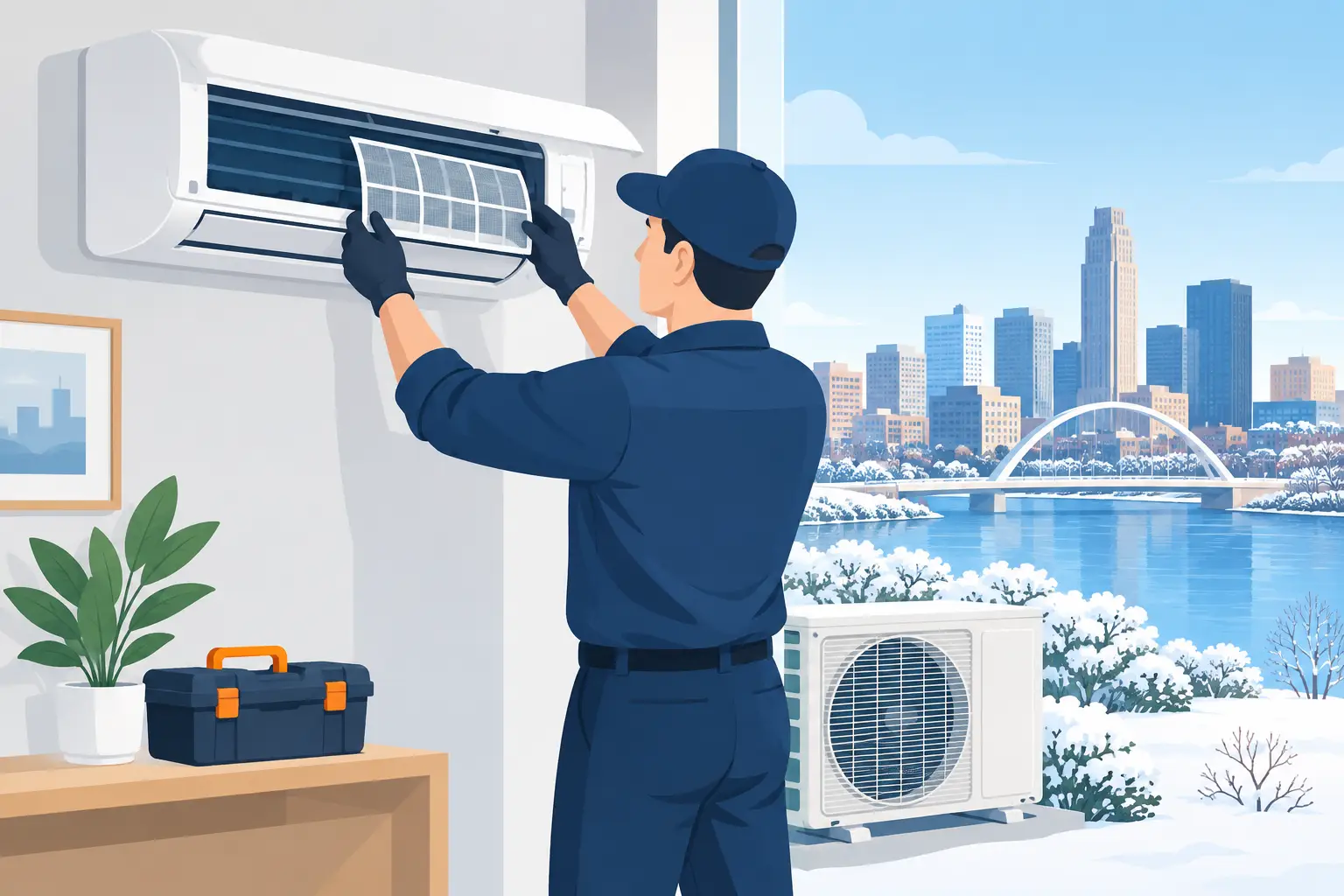
A ductless mini-split can be a great fit for an Omaha sunroom, finished basement, rental unit, home addition, or small business space. But when it is asked to cool through a humid Nebraska heat wave and provide heat during a hard freeze, basic upkeep matters. Knowing how to maintain mini splits helps protect comfort, efficiency, and the equipment you paid for.
The good news is that most routine care is simple. The key is doing the right homeowner tasks regularly, then having a licensed technician handle the cleaning and checks that require specialized tools. A mini-split that looks fine on the wall can still develop restricted airflow, drainage trouble, or refrigerant-related issues that show up when you need it most.
How to Maintain Mini Splits Month to Month
Start with the indoor unit’s air filters. Open the front panel according to your owner’s manual, slide out the washable mesh filters, and inspect them at least once a month during heavy use. If they are dusty, rinse them with lukewarm water and let them dry completely before reinstalling them.
Do not use harsh cleaners, and do not put a damp filter back into the unit. A wet filter can contribute to musty odors and encourages the kind of moisture buildup nobody wants inside an HVAC system.
Clean filters are more than a housekeeping detail. When filters clog, the indoor unit has to work harder to move air across its coil. You may notice weaker airflow, rooms that take longer to heat or cool, more noise from the unit, or higher utility bills. In severe cases, airflow restrictions can contribute to coil icing and system shutdowns.
While the panel is open, look for visible dust on the louvers and housing. Wipe those areas gently with a soft, dry cloth. Avoid spraying cleaner or water directly into the indoor head. The coil, blower wheel, electronics, and condensate components sit behind that cover, and they should be cleaned correctly rather than soaked with a household spray bottle.
It also helps to pay attention to how the unit sounds and smells. Mini-splits are normally quiet. A new rattling sound, grinding noise, mildew smell, or whistling airflow is worth addressing before it becomes an emergency call during extreme weather.
Keep the Outdoor Unit Clear All Year
The outdoor condenser needs room to breathe. Leaves, cottonwood, grass clippings, mulch, snow, and drifting debris can block the coil and reduce performance. Check the area around the unit every few weeks and after major storms.
Keep shrubs and stored items away from the outdoor unit. A clear space of roughly two feet around the sides is a practical target, though the manufacturer’s clearance requirements should always take priority. Do not build a tight enclosure around it to hide the equipment. It may look cleaner, but poor airflow can create expensive problems.
In summer, gently remove loose debris from the exterior fins with a soft brush or a light rinse from a garden hose. Never use a pressure washer. Those thin aluminum fins bend easily, and damaged fins reduce airflow through the coil.
Winter maintenance is just as important in Omaha. If your mini-split provides heat, it will periodically enter a defrost cycle to remove frost from the outdoor coil. Some frost is normal. Heavy ice that stays in place, repeated shutdowns, or water refreezing into a thick base around the unit is not.
Keep snow away from the unit and make sure the drain area below it is not blocked by ice. Do not chip ice from coils with a sharp tool or pour hot water over the unit. You can damage the coil, wiring, or casing. If ice buildup keeps returning, call for service. The cause could range from drainage and placement issues to a mechanical problem that needs diagnosis.
Watch the Condensate Drain Line
When a mini-split cools, it removes moisture from indoor air. That water has to leave through a condensate drain line or pump. In a humid Omaha summer, a clogged drain can quickly lead to water dripping from the indoor head, staining a wall, or damaging flooring below.
Check occasionally for water where it does not belong. Look beneath the indoor unit, around the wall sleeve where the line exits, and near the outdoor drain termination. If you see dripping indoors, turn the system off and arrange service rather than continuing to run it.
Some homeowners can see and clear obvious debris around an exterior drain outlet, but the internal drain pan and line are not a good place for trial-and-error repairs. Drain line routing varies by installation, and condensate pumps have their own failure points. A technician can clear the line, inspect the pump if one is installed, and make sure the system drains properly without creating another leak.
Use Settings That Support Efficient Operation
Mini-splits are designed to maintain a steady temperature efficiently. Constantly turning the system on and off or making large temperature swings can reduce comfort and increase runtime. During cooling season, choose a realistic setpoint and let the unit do its job. During heating season, avoid shutting the system down overnight if it is serving an occupied space during very cold weather.
The best temperature depends on the room, insulation, sun exposure, and how the mini-split was sized. A west-facing room with large windows may need different settings than a shaded basement office. If one area is consistently too warm or too cold, do not assume the equipment is failing. Airflow direction, filter condition, outdoor conditions, and sizing can all play a role.
Use the remote’s fan and vane settings thoughtfully. Directing airflow toward the center of the room generally helps distribute comfort better than blowing directly at a couch, bed, or desk. If the unit is in dehumidification mode, remember that it may cool differently than it does in standard cooling mode.
Schedule Professional Maintenance Before Peak Seasons
Homeowner care keeps a mini-split cleaner between visits, but it does not replace professional maintenance. Most systems benefit from a thorough tune-up once a year. If the mini-split handles both heating and cooling, runs in a high-use business space, or serves several rental units, twice-yearly service may make more sense.
A professional visit goes beyond rinsing the filters. A licensed technician can inspect the indoor coil and blower wheel for buildup, flush the condensate system, check electrical connections, examine refrigerant line insulation, verify operating performance, and inspect the outdoor coil and components. If the system uses a heat pump for winter heating, testing it before cold weather is especially valuable.
This is also the time to catch smaller issues before they become larger repairs. A weak condensate pump, dirty blower wheel, loose wire, worn line-set insulation, or restricted outdoor coil may not stop the system immediately. Left alone, each can affect efficiency, comfort, or reliability.
For landlords and property managers, planned maintenance is easier to coordinate than an urgent no-heat or no-cooling call with a tenant waiting. Keeping a simple record of filter cleaning, service dates, and reported issues also helps identify recurring problems at a property.
Warning Signs That Need More Than Routine Cleaning
Some mini-split problems should not be handled with a filter rinse and a hopeful restart. Call a qualified HVAC technician if you notice any of the following:
- Water leaking from the indoor unit or water marks on the wall beneath it.
- Ice on the indoor coil, refrigerant lines, or outdoor unit that does not clear after a normal defrost cycle.
- A burning smell, repeated breaker trips, error codes, or a unit that will not power on.
- Little or no heating or cooling even though the unit is running and the filters are clean.
- New grinding, buzzing, or rattling noises, especially from the outdoor unit.
Refrigerant work, electrical repairs, deep coil cleaning, and diagnostic testing are not DIY jobs. Opening sealed components or adding refrigerant without finding the cause of a problem can create more damage and may void manufacturer protections. Straight answers and proper testing are usually less expensive than guessing.
Make Maintenance Part of the Season
The simplest routine is to check filters monthly during peak use, clear debris around the outdoor unit after storms, and schedule professional service before the weather turns demanding. Spring is a smart time to prepare for cooling, while early fall gives a heat-pump mini-split a chance to be checked before Omaha temperatures drop.
A clean, properly serviced mini-split is quieter, more efficient, and less likely to leave a room uncomfortable when the forecast gets serious. If something does not look or sound right, having a local technician inspect it early can protect both your equipment and your peace of mind.
[addtoany]RELAX! We offer flexible financing options!
