HVAC Diagnostics When Your System Acts Up
A furnace can be running and still leave rooms cold. An air conditioner can blow air that feels normal at the vent but never bring the house down to the thermostat setting. Those are the moments when HVAC diagnostics matter most. The visible symptom is only part of the problem. A proper diagnosis identifies why the system is struggling before anyone recommends a repair.
For Omaha homeowners, landlords, and small-business owners, that distinction can prevent wasted money and repeat breakdowns. When winter temperatures drop hard or a summer heat wave pushes an AC system nonstop, guessing at a fix is not enough. You need a licensed technician who can inspect the equipment, explain what they found in plain language, and provide upfront options without pressuring you into work you do not need.
What HVAC Diagnostics Actually Means
HVAC diagnostics are the process of finding the source of a heating, cooling, airflow, thermostat, or indoor air quality problem. It is more than noticing that a part has failed. A technician needs to determine whether that failed part is the main issue or the result of another problem elsewhere in the system.
For example, a furnace may shut off because of a dirty flame sensor. But it can also shut off because of a blocked vent, a failing pressure switch, poor combustion, an overheating condition, or a control-board issue. Replacing a part without checking the full sequence of operation can get the heat running temporarily while leaving the real problem in place.
The same applies to air conditioning. Weak cooling could come from a dirty filter, a clogged coil, a blower problem, a frozen evaporator coil, low refrigerant, duct leakage, a failing capacitor, or a thermostat that is not communicating correctly. The right repair depends on the cause, not the symptom.
Signs It Is Time for HVAC Diagnostics
Some HVAC failures are obvious, such as a system that will not turn on at all. Others build gradually and are easy to ignore until the equipment quits on the hottest or coldest day of the year.
Call for service when you notice uneven temperatures between rooms, little or no air coming from vents, unusual cycling, rising utility bills, strange odors, loud new noises, water around the indoor unit, or a thermostat that does not seem to match how the house feels. A furnace that repeatedly trips a breaker or an air conditioner that freezes up also needs attention soon.
For rental properties, tenant reports should be taken seriously even if the system is still operating. A complaint about a bedroom that never cools, a furnace that starts and stops all night, or a burning smell from a vent can point to a developing issue. Prompt diagnosis protects the tenant’s comfort and gives owners clearer information before a small repair becomes an emergency replacement.
When a Problem Is an Emergency
Turn the system off and request immediate help if you smell gas, notice signs of carbon monoxide exposure, see smoke, hear electrical buzzing, or have a furnace that is not producing heat during dangerous cold. If a carbon monoxide alarm sounds, get everyone outside and contact emergency services first.
A failed AC during severe heat can also become urgent for households with infants, older adults, pets, or medical concerns. The goal is to restore safe, workable conditions quickly, then determine the repair that will keep the problem from returning.
What a Technician Checks During a Diagnostic Visit
A complete diagnostic visit starts with listening. The details you provide matter: when the problem began, whether it happens at certain times of day, what the thermostat displays, and whether there were recent power outages, construction projects, filter changes, or unusual noises.
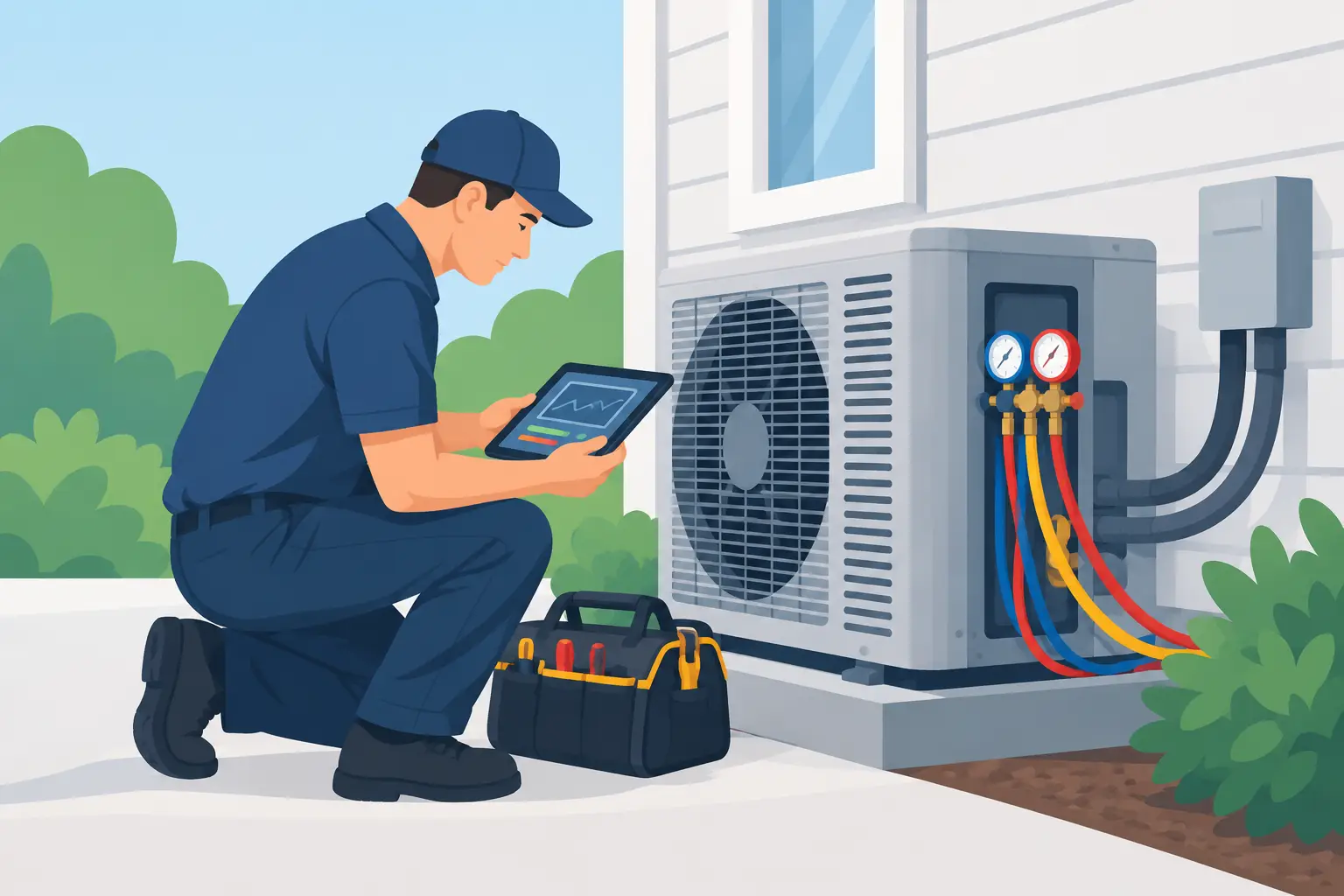
From there, the technician checks the system’s operation and safety controls. The exact process varies by equipment type, but it commonly includes thermostat settings and wiring, electrical connections, voltage and amperage readings, capacitors, contactors, motors, blower performance, filters, drain lines, and control boards.
On a furnace, the inspection may also include the ignition sequence, flame sensor, burners, venting, inducer motor, heat exchanger condition, gas pressure, and limit switches. On an air conditioner or heat pump, the technician may inspect the outdoor unit, refrigerant pressures, coils, compressor operation, reversing valve, defrost controls, and temperature split across the indoor coil.
Airflow deserves close attention. A system can have working mechanical parts and still perform poorly because of a restricted filter, blocked return, dirty coil, closed registers, undersized ductwork, or a blower setup that is not moving enough air. In some cases, the equipment is not the primary problem at all.
Why Accurate Diagnosis Saves Money
The least expensive repair is not always the lowest-cost option if it does not solve the failure. Replacing a capacitor, sensor, or thermostat may be appropriate, but only after testing confirms it is the cause. Good HVAC diagnostics reduce the chance of paying for a part that was never needed.
Accurate testing also helps you make a better repair-versus-replace decision. If your system is relatively new and the repair is limited, fixing it is often the sensible choice. If an older unit has a major compressor problem, repeated refrigerant leaks, a cracked heat exchanger, or several costly components nearing the end of their life, replacement may offer better long-term value.
There is no one answer for every home or building. Equipment age, repair cost, efficiency, warranty status, comfort needs, and plans for the property all matter. A straightforward contractor should show you the options, answer questions clearly, and let you decide without high-pressure sales tactics.
What You Can Check Before Calling
A few simple checks can rule out the most common avoidable issues. Make sure the thermostat is set to heat or cool, not just fan mode, and verify the temperature setting. Check that the HVAC breaker has not tripped and that the outdoor disconnect is on if you are dealing with air conditioning or a heat pump.
Look at the air filter. If it is visibly packed with dust, replace it with the correct size and type. Check that supply registers and return grilles are open and not blocked by furniture, rugs, or storage. In winter, make sure exterior furnace intake and exhaust pipes are clear of snow, ice, leaves, and debris.
Do not keep resetting a breaker, bypass safety switches, open sealed electrical panels, or add refrigerant yourself. Those actions can create safety hazards and make a diagnosis harder. If the system is making a grinding noise, smelling burnt, leaking heavily, or short-cycling, shut it down and schedule service.
Maintenance Makes Future Diagnostics Easier
Seasonal maintenance cannot prevent every repair, but it gives technicians a chance to catch worn parts, airflow restrictions, drainage problems, and safety concerns before they become a no-heat or no-cooling call. It also creates a baseline for how your equipment should operate.
For homes with pets, high dust levels, frequent thermostat adjustments, or older equipment, regular filter checks and maintenance are especially worthwhile. Landlords and property managers benefit from scheduled service because it helps reduce surprise calls, documents equipment condition, and gives tenants more reliable comfort.
Midlands Heating & Air approaches diagnostic work the same way it approaches every service call: find the immediate problem, explain it clearly, provide fair options, and do the job right the first time. Whether the issue is a furnace on a cold Omaha night, a heat pump that will not switch modes, or an AC system falling behind in July, the right next step is a careful diagnosis rather than a quick guess.
Your HVAC system does not need to be understood in technical jargon for you to make a confident decision. Ask what failed, why it failed, what the repair includes, and what could happen if you wait. Clear answers are the foundation of a comfortable home and a repair you can feel good about.
[addtoany]RELAX! We offer flexible financing options!
