HVAC Maintenance That Helps Omaha Systems Last
A furnace can sound perfectly normal on a mild October morning, then struggle when Omaha temperatures drop hard overnight. The same is true of an air conditioner that seems fine until the first stretch of 95-degree heat. HVAC maintenance is how homeowners, landlords, and small-business owners find the small issues before they turn into an uncomfortable, expensive emergency.
It is not about selling you a replacement before you need one. Good maintenance is practical work: checking safety controls, cleaning components that affect performance, identifying wear, and giving you a clear picture of what your system needs now versus what may need attention later. That distinction matters when you are trying to plan a budget, protect tenants, or keep a busy household comfortable.
What HVAC Maintenance Actually Does
Your heating and cooling system moves a lot of air, runs through large temperature swings, and works around the clock during Nebraska’s toughest weather. Dust collects, electrical connections can loosen, drains can clog, moving parts wear down, and filters become restrictive. None of these problems necessarily causes an immediate failure, but each can make the system work harder than it should.
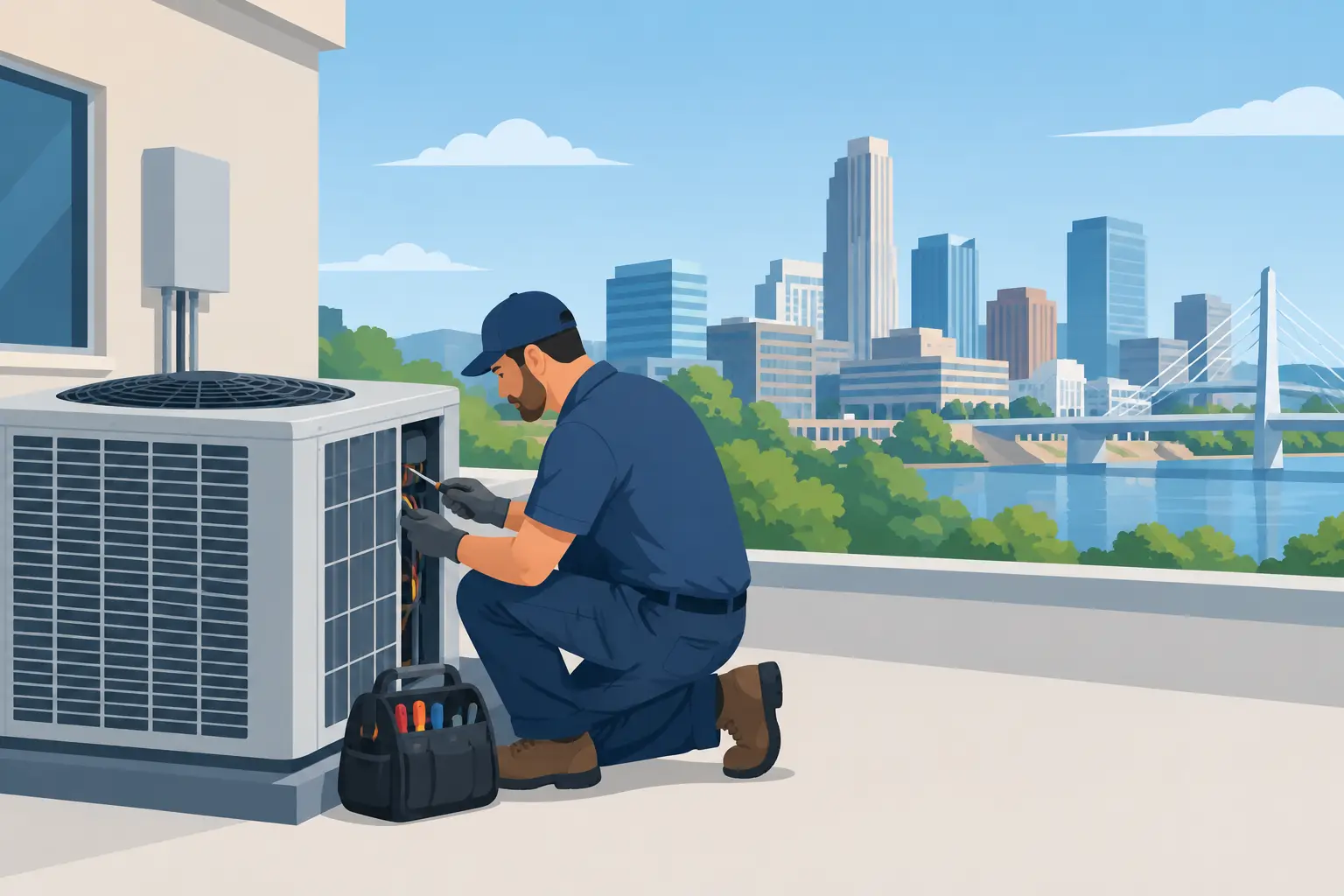
A professional visit typically includes an inspection of the equipment’s operation, airflow, electrical components, controls, and visible condition. For cooling equipment, that often means checking the outdoor unit, refrigerant-related performance, condensate drainage, and coil condition. For heating equipment, the focus includes safe ignition, heat exchanger condition, venting, combustion-related components, and carbon monoxide safety where applicable.
The exact checklist depends on the system. A heat pump needs attention in both heating and cooling seasons. A ductless mini-split has different filters and indoor heads to inspect. PTAC units in apartments or hotels have their own airflow, drainage, and electrical concerns. The goal stays the same: keep the equipment operating safely, efficiently, and predictably.
Why Omaha Weather Makes Maintenance Worth Planning
Omaha systems do not get much of an offseason. Winter can put a furnace under sustained demand, while summer heat and humidity can keep an air conditioner running for hours at a time. That heavy use exposes problems that may have gone unnoticed during milder weather.
A dirty flame sensor, weak capacitor, plugged drain line, or worn blower component may be a manageable repair during a planned visit. If it fails during a deep freeze or heat wave, the situation changes quickly. You may be dealing with no heat, no cooling, frozen pipes, an unhappy tenant, or a business space that is difficult to operate.
Maintenance cannot guarantee that a part will never fail. Mechanical equipment has limits, and unexpected breakdowns do happen. What it can do is lower the risk of avoidable failures and give you more time to make decisions without pressure. That is especially valuable when a system is aging and you need to weigh a repair against replacement on your own terms.
When to Schedule HVAC Maintenance
For most Omaha homes, twice-yearly service is the most practical approach: cooling maintenance in spring and heating maintenance in fall. This timing gives a technician a chance to spot concerns before the season puts the system under its heaviest load.
If your system is newer, once-a-year service may feel sufficient, but the right schedule depends on the equipment, its warranty requirements, usage, and condition. Homes with pets, heavy dust, allergies, multiple occupants, or a constantly running system often benefit from more regular attention. So do rental properties, where avoiding an after-hours tenant call can save far more than a planned visit costs.
Small businesses should also consider how a shutdown affects customers and employees. A light commercial system serving an office, retail space, or restaurant may need a maintenance plan built around operating hours, equipment age, and the cost of downtime.
Signs You Should Not Wait for Your Next Tune-Up
A tune-up is preventative service, not a reason to ignore a system that is already asking for help. Schedule diagnostics sooner if you notice reduced airflow, uneven temperatures, short cycling, new noises, unusual odors, rising utility bills, water around the indoor unit, or a thermostat that does not seem to match how the space feels.
For furnaces, a yellow or flickering burner flame, repeated ignition attempts, or a carbon monoxide alarm should be treated seriously. Turn the system off if you believe there is a safety issue, make sure people can get fresh air, and call a qualified HVAC professional. Do not try to troubleshoot combustion or gas-related concerns on your own.
For air conditioners and heat pumps, ice on refrigerant lines, warm air from the vents, or a tripped breaker can point to issues that need more than a filter change. Resetting a breaker repeatedly is not a repair. It is a reason to have the equipment checked.
What You Can Do Between Professional Visits
Homeowners can make a real difference without taking apart equipment or guessing at repairs. Start with the air filter. Check it regularly and replace it when it is visibly dirty or according to the filter type and your home’s conditions. A clogged filter restricts airflow, increases strain on the blower, and can contribute to comfort problems.
Keep the outdoor unit clear of leaves, grass clippings, stored items, and landscaping that blocks airflow. Give it room to breathe. Inside, keep supply and return vents open and clear of furniture, rugs, and boxes. Closing off too many vents can create airflow issues rather than saving energy.
Pay attention to changes. If the system starts making a sound it did not make before, runs longer than usual, or leaves certain rooms uncomfortable, write down what you notice and when it happens. That information helps a technician diagnose the problem faster and can prevent a vague concern from becoming a costly failure.
Smart thermostats can also help when they are set up correctly. They make it easier to manage schedules and monitor temperature changes, but they are not a cure for an undersized system, dirty coil, or failing component. If comfort has changed, it is worth finding the cause instead of adjusting the thermostat again and again.
Maintenance Helps You Make Better Repair Decisions
One of the biggest benefits of planned service is having a record of your system’s condition. A technician can explain whether a repair is straightforward, whether a component is showing repeated problems, and whether the equipment is nearing the point where replacement deserves a conversation.
There is no universal age when every furnace or air conditioner should be replaced. Some systems run well for many years with proper care. Others become expensive sooner because of installation quality, maintenance history, usage, or major component failures. The right decision depends on repair cost, efficiency, reliability, available parts, and how long you expect to remain in the property.
A trustworthy contractor should present the options plainly. If a repair makes sense, you should hear that. If replacement is likely to be the better long-term value, you should understand why, what the options are, and what the pricing includes. No-pressure recommendations are especially important when you are already dealing with a comfort problem.
A Practical Plan for Homes and Rental Properties
For a homeowner, a simple calendar reminder for spring and fall maintenance is often enough to stay ahead of trouble. For landlords and property managers, consistency matters even more. Keeping service records by property and unit makes it easier to track recurring repairs, plan capital expenses, and show tenants that their comfort concerns are being handled professionally.
Midlands Heating & Air provides planned maintenance for Omaha-area systems with the same straightforward approach used for repairs: inspect the equipment, explain what was found, and address the immediate need without unnecessary upselling. If something needs attention, you should know the reason, the options, and the cost before work moves forward.
The best time to think about your furnace or AC is when it is still working. Schedule service before the weather forces the issue, replace the filter before it restricts airflow, and call when something changes instead of hoping it settles down. A little attention at the right time can keep a routine day from becoming a no-heat or no-cooling emergency.
[addtoany]RELAX! We offer flexible financing options!
