
PTAC Unit Installation Service Done Right
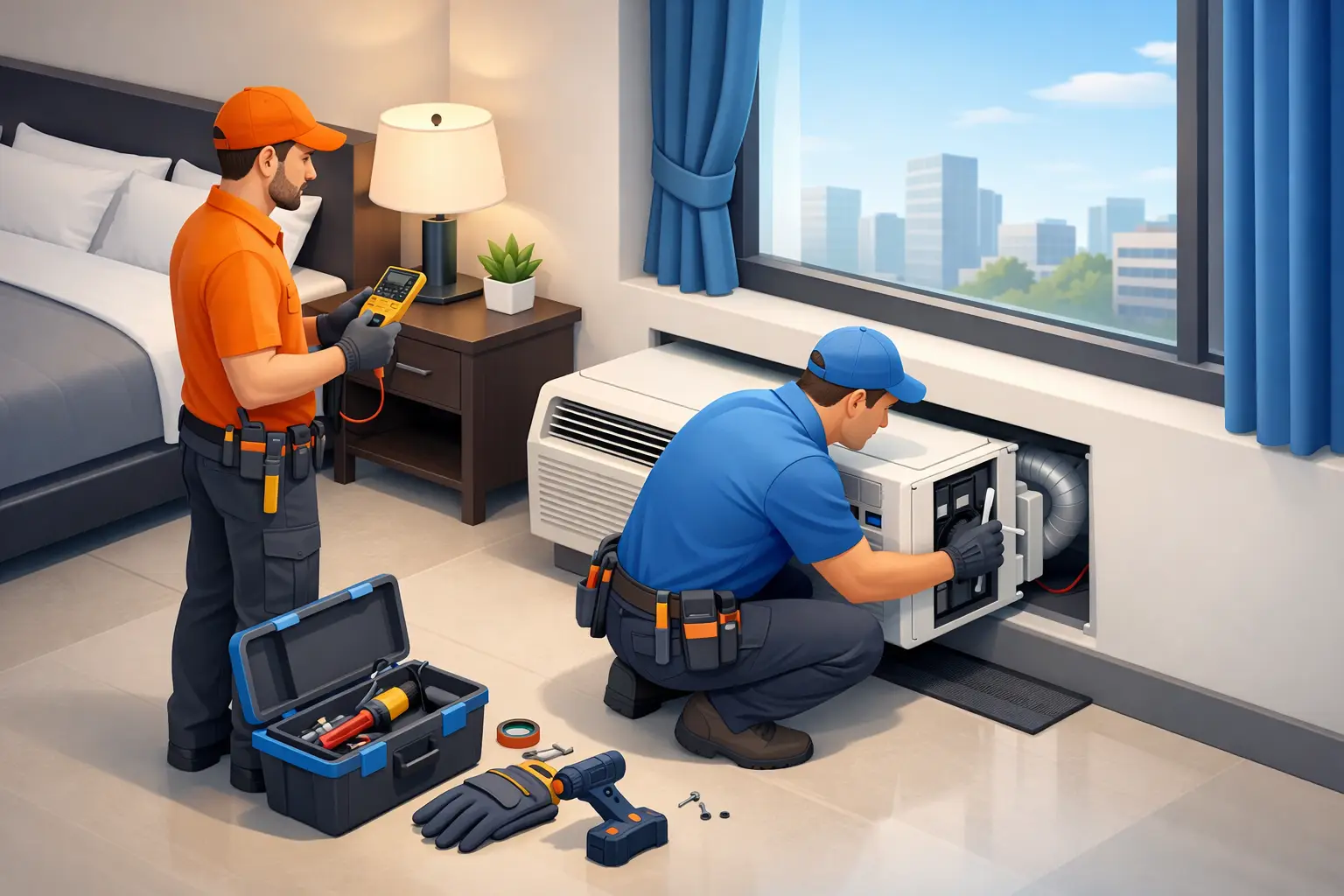
A PTAC that rattles, leaks around the wall sleeve, trips a breaker, or cannot keep one room comfortable is more than an annoyance. For a tenant, guest, homeowner, or small-business operator, it can quickly become a comfort complaint and a costly disruption. A professional PTAC unit installation service addresses the details that determine whether the equipment runs safely and reliably through Omaha heat, cold, and everything in between.
PTAC units are common in apartments, hotels, offices, additions, and rooms that need independent heating and cooling. Because they sit through an exterior wall, installation is not as simple as sliding in a new unit and turning it on. The sleeve, electrical connection, drainage path, exterior grille, wall opening, and equipment size all need to work together.
What a PTAC Unit Installation Service Should Include
A quality installation starts with the room, not the box the unit came in. The technician should confirm the unit is appropriate for the space and ask practical questions: Does the room get strong afternoon sun? Is it on an upper floor? Does the existing unit struggle only during extreme weather, or all season? A unit that is too small may run constantly without reaching the set temperature. One that is oversized may cycle too quickly, leaving the room uncomfortable and doing a poor job managing humidity.
The existing wall sleeve deserves close attention. PTAC chassis and sleeves are not always interchangeable, even when they appear similar. Dimensions, drain locations, controls, and manufacturer requirements can differ. Forcing an incompatible chassis into an old sleeve can create air gaps, water problems, vibration, and early equipment failure.
Proper installation also includes checking the exterior grille and weather seal. Outside air and rain need to stay outside, while the unit still needs the airflow it was designed for. A damaged grille, gaps around the sleeve, or missing insulation can make a room drafty and raise energy use. In a Nebraska winter, those small gaps become much easier to notice.
Electrical safety is another part of the job that should never be guessed at. PTAC units may require a specific voltage, dedicated circuit, receptacle type, and amp rating. A technician should verify the electrical setup matches the new equipment before installation. Repeated breaker trips are not a problem to work around. They are a reason to stop and identify the cause.
Finally, the unit should be tested in both heating and cooling modes when conditions allow. That means checking airflow, temperature response, controls, drainage, unusual noise, and the fit of the front cover. The goal is not merely to see that the unit turns on. It is to make sure it performs as expected before the job is complete.
When Replacement Is Smarter Than Another Repair
Many PTAC issues can be repaired. A failed capacitor, thermostat issue, dirty coil, blower problem, or worn fan motor may not require a replacement. That is why a clear diagnosis matters. Replacing equipment before understanding the problem can waste money, especially for property owners managing several units.
Replacement starts making more sense when repairs are frequent, the unit has major refrigerant or compressor trouble, parts are difficult to source, or the system cannot maintain comfort despite being maintained. Age matters too, but it is not the only factor. A well-maintained unit may still have useful life, while a newer unit with recurring electrical or drainage issues may need a closer look.
For rental properties, consistency can be part of the decision. If several aging PTACs are the same model and require repeated service, planned replacement can be easier to budget than waiting for individual failures during the busiest season. It also gives owners time to choose compatible equipment rather than making a rushed decision after a tenant loses heat during a deep freeze.
A straightforward contractor should explain both paths: what it would cost to repair the existing unit, what replacement would involve, and what concerns may remain after a repair. There should be no pressure to replace a unit that has a reasonable, cost-effective repair available.
The Installation Details That Prevent Callbacks
PTAC equipment lives in a demanding location. It is exposed to outdoor weather on one side and relied on for indoor comfort on the other. Most callbacks after installation come down to missed fit, drainage, airflow, or electrical details.
Water management is a common example. A PTAC needs to handle condensate correctly in cooling season and should be positioned according to the manufacturer’s requirements. If the sleeve is damaged, improperly pitched, or blocked, water can collect where it should not. That may lead to odors, staining, leaks, or damage around the wall opening.
Airflow matters just as much. Furniture, drapes, and other obstructions should not block the indoor discharge or return air. Outside, the grille must remain clear so the unit can reject heat effectively. A properly installed PTAC can still struggle if its airflow path is restricted after the technician leaves.
Noise should be evaluated realistically. PTACs are not silent, and some normal operational sounds are expected. But loud vibration, scraping, persistent rattling, or a chassis that shifts in the sleeve is not something occupants should simply tolerate. Correcting those problems at installation is much easier than returning after a tenant complaint.
Choosing the Right PTAC for the Space
The least expensive unit is not always the least expensive choice over time. Equipment should fit the room’s heating and cooling needs, electrical availability, sleeve compatibility, and how the space is used. A ground-floor office with exterior doors opening all day has different demands than a shaded apartment bedroom.
Controls are worth considering as well. Some PTACs offer more precise temperature settings, occupancy features, wired thermostat options, or controls suited for hospitality and multi-unit properties. Those features can be useful, but only if they solve a real operational need. Paying for complicated controls that no one uses may not benefit a homeowner or property manager.
For landlords and building managers, standardizing compatible models can simplify future maintenance and replacement. For a single homeowner, the priority may be quiet operation, dependable heat, and a unit that works with the existing sleeve without unnecessary wall work. The right answer depends on the property, not a one-size-fits-all recommendation.
What to Expect on Installation Day
A prepared installation should cause as little disruption as possible. The work area is protected, the existing unit is removed carefully, and the technician inspects the sleeve and electrical connection before installing the replacement. If a problem is found behind the old chassis, such as corrosion, damaged wiring, or water intrusion, it should be explained clearly before additional work begins.
After the new unit is secured and tested, the technician should walk through basic operation with the customer or property representative. That includes how to change modes, set temperatures, clean the filter, and recognize signs that service is needed. For occupied rentals, clear communication helps tenants use the equipment correctly and gives managers fewer avoidable service calls.
At Midlands Heating & Air, our approach is simple: assess the setup, explain the options, provide upfront pricing, and install equipment correctly without pushing work you do not need. Whether it is one unit in a home addition or multiple units in a rental property, careful installation protects comfort and helps avoid repeat problems.
Simple Care After a New PTAC Installation
A new PTAC still needs attention to perform well. Filters should be checked regularly, especially in homes with pets, high occupancy, or nearby construction dust. The exterior grille should stay free of leaves, snow buildup, and debris. If the unit begins making new noises, produces weak airflow, leaks, smells musty, or trips the breaker, scheduling service early is usually less expensive than waiting for a full failure.
Planned maintenance is particularly useful for properties with several PTAC units. It allows small concerns to be found before the first major heat wave or the first hard freeze. It also gives owners a clearer picture of which units are operating well and which ones may need repair or replacement planning.
Before the next weather swing puts your PTAC to the test, make sure the unit, sleeve, electrical connection, and drainage are all working as one system. That little bit of attention can mean the difference between a comfortable room and an urgent call when the temperature outside is least forgiving.
[addtoany]RELAX! We offer flexible financing options!
