9 Signs You Need a New Furnace This Winter
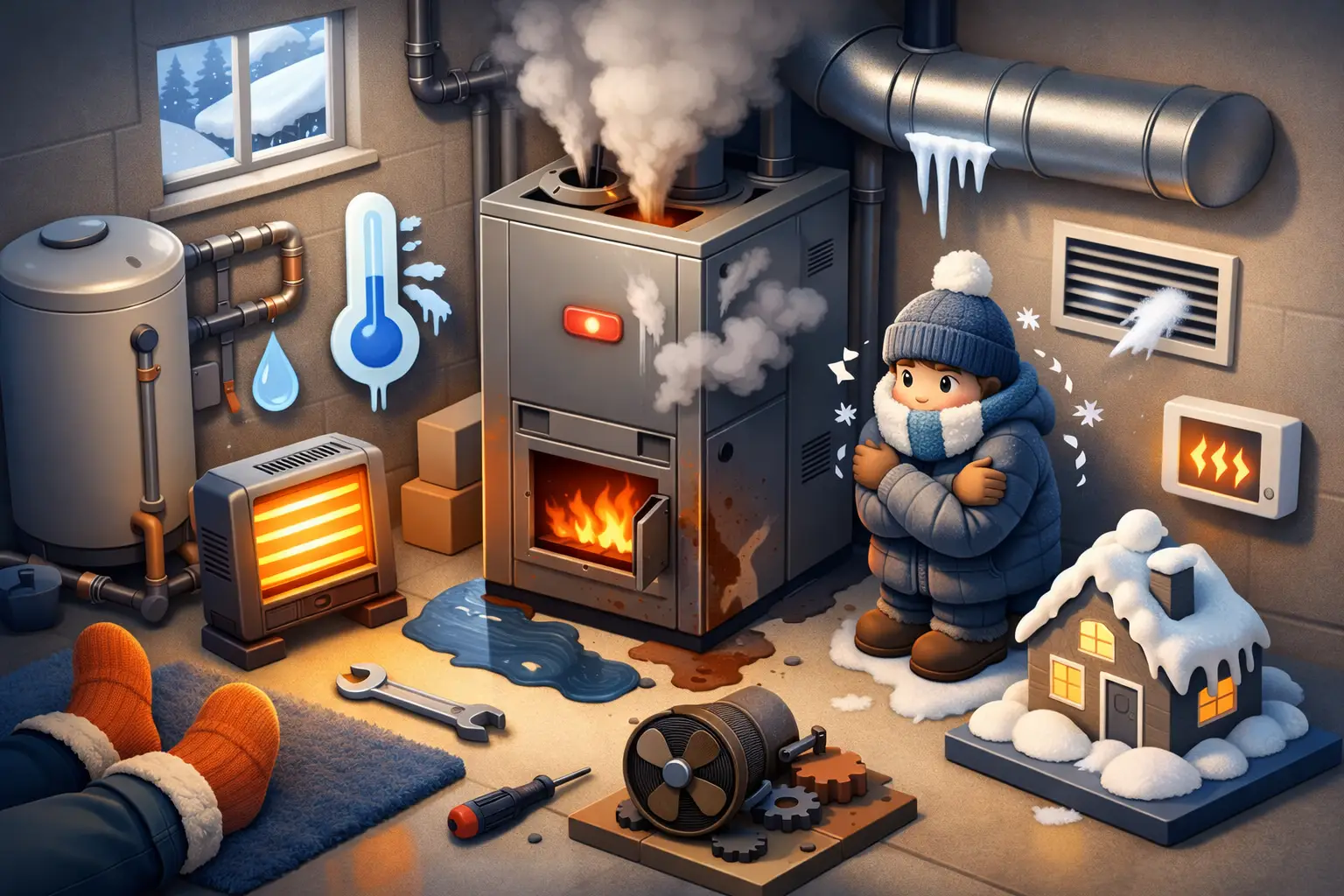
A furnace can seem fine right up until the night Omaha temperatures drop below zero and it cannot keep up. Most systems give homeowners warning before that point, but those warnings are easy to dismiss when the heat still comes on. Knowing the signs you need a new furnace can help you plan a replacement on your terms instead of making a rushed decision during an emergency.
A new furnace is not always the right answer. Many problems can be repaired safely and affordably, especially on a well-maintained system. The key is looking at the furnace’s age, reliability, safety, repair history, and ability to heat your home without driving up utility costs.
1. Your Furnace Is Nearing the End of Its Expected Life
Most gas furnaces last roughly 15 to 20 years with professional maintenance and normal use. Some run longer, but age matters because major components wear down and replacement parts can become harder to find. If your furnace is approaching that range, a repair may still make sense for a minor issue. A failed heat exchanger, blower motor, or control board is a different conversation.
Check the unit’s manufacture date if you are unsure how old it is. Homeowners who bought an older Omaha house may inherit a furnace that has already seen decades of winter service. At that stage, it is reasonable to compare repair costs against the long-term value of a new system rather than automatically approving another major repair.
2. Repairs Are Becoming a Regular Expense
One service call does not mean you need replacement equipment. Furnaces have igniters, flame sensors, pressure switches, and other parts that can fail without signaling the end of the system. But repeated breakdowns are one of the clearest signs you need a new furnace.
Think about the last two or three heating seasons. Have you paid for multiple repairs? Does the furnace quit on the coldest days? Are repairs solving one issue only for another problem to appear soon after? When a system becomes unreliable, the cost is not just the invoice. It is also missed work, cold rooms, worried tenants, and the stress of wondering whether the heat will hold through the next cold snap.
A straightforward technician should explain the immediate repair, what caused it, and whether the furnace has a reasonable future after that repair. You deserve options, not pressure to replace equipment that can still be repaired responsibly.
3. Heating Bills Keep Rising Without a Clear Reason
Winter utility bills naturally rise when Nebraska weather turns harsh. A concerning pattern is when bills climb year after year even though your household habits, thermostat settings, and utility rates have not changed much.
As furnaces age, they can lose efficiency through worn components, poor combustion, airflow problems, or frequent short cycling. Dirty filters and leaky ductwork can also raise heating costs, so a higher bill alone is not proof that replacement is necessary. A proper diagnostic can separate a furnace problem from an airflow or insulation issue.
If the furnace is older and working harder to deliver the same comfort, a newer high-efficiency model may reduce fuel use. Savings vary by home, equipment choice, duct condition, and how you use the thermostat, so it is best to ask for realistic expectations rather than a promise of a specific dollar amount.
4. Some Rooms Are Warm While Others Stay Cold
A healthy heating system should provide reasonably consistent comfort throughout the home. If the living room feels warm while bedrooms, upstairs spaces, or rooms over the garage stay chilly, the furnace may be struggling to move enough heated air.
Uneven heat is not always a furnace replacement issue. Closed vents, undersized or poorly designed ductwork, a failing blower, inadequate insulation, and thermostat location can all contribute. In some homes, a targeted repair or duct adjustment makes more sense than replacing the entire furnace.
Still, if an aging furnace can no longer maintain temperature across the house, especially during sustained cold, it is worth evaluating. The goal is not simply to make the thermostat display the right number. It is to make the rooms where your family sleeps, works, and gathers comfortable.
5. The Furnace Runs Constantly or Cycles On and Off Too Often
During a deep freeze, a furnace may run for long stretches. That can be normal. What is not normal is a system that runs almost nonstop in moderate weather yet cannot reach the thermostat setting.
Frequent on-and-off operation, called short cycling, is another red flag. It can be caused by a dirty filter, thermostat problem, blocked vent, overheating, incorrect sizing, or failing internal components. Short cycling puts extra wear on the furnace and often leads to uneven comfort and higher energy use.
Do not ignore the problem by turning the thermostat up higher. Replace the filter if it is dirty and make sure supply and return vents are open and unobstructed. If cycling continues, schedule a professional inspection. A technician can determine whether a repair will correct the issue or whether the furnace is no longer a dependable fit for the home.
6. You Hear New or Unusual Noises
Furnaces are never completely silent, but you know what your system normally sounds like. Banging, booming at startup, metal scraping, rattling, squealing, or a persistent humming noise deserves attention.
Some sounds point to a repairable concern, such as a loose panel, worn belt in an older model, or blower issue. Others may indicate delayed ignition, damaged internal parts, or problems affecting safe operation. A loud boom when the burners ignite, for example, should not be treated as a normal part of an older furnace.
Turn off the system and call for service if you smell gas, hear severe banging, or notice any concern that feels unsafe. For a gas odor, leave the building, avoid using switches or flames, and contact the gas utility or emergency services from a safe location.
7. The Burner Flame Is Yellow Instead of Blue
A gas furnace should typically have a steady blue flame. A yellow, flickering, or irregular flame can indicate incomplete combustion or another issue that needs prompt professional attention. Dust can sometimes affect the appearance briefly, but homeowners should not attempt burner adjustments or combustion repairs themselves.
This is one reason annual maintenance matters. A trained technician can inspect burners, venting, safeties, and other critical parts before a small issue becomes a no-heat call in January.
8. Your Carbon Monoxide Detector Goes Off
Treat any carbon monoxide alarm as an emergency. Get everyone, including pets, outside into fresh air immediately. Call emergency services or the gas utility from outside, and do not reenter until you are told it is safe.
Carbon monoxide can come from more than a furnace, including water heaters, fireplaces, attached garages, and other fuel-burning appliances. But an alarm should always trigger a professional inspection. Cracked heat exchangers and venting problems are serious concerns, particularly in older equipment.
Working carbon monoxide detectors should be installed according to their manufacturer instructions and local requirements. Test them regularly and replace batteries or the detector itself as needed. They are a critical safety layer, not a substitute for maintaining fuel-burning equipment.
9. You Are Planning Around a Furnace You Do Not Trust
Sometimes the decision becomes clear before the furnace fully fails. You find yourself arranging backup space heaters, warning a tenant that the system is temperamental, or leaving town with concern about whether the heat will stay on. That lack of confidence has value in the repair-versus-replace decision.
Planned replacement gives you time to consider furnace efficiency, warranty coverage, installation quality, financing, and the needs of your household or property. Emergency replacement is still possible when necessary, but it leaves fewer choices and more pressure.
How to Decide Between Furnace Repair and Replacement
Start with a full diagnostic rather than an assumption. Ask for the specific failed component, the repair cost, whether the repair addresses the root cause, and the condition of the major parts that remain. For an older furnace facing an expensive repair, compare that cost with the expected benefit of replacement, not just the lowest price today.
Installation quality matters as much as the equipment itself. A correctly sized furnace, proper airflow setup, safe venting, and careful startup all affect comfort and performance. The cheapest quote is not always the best value if it skips the details that help a system last.
Midlands Heating & Air provides clear repair and replacement options for Omaha-area homeowners, landlords, and small businesses, with upfront pricing and zero-pressure recommendations. Whether the answer is a simple repair or a new furnace, the immediate priority is safe, reliable heat.
If your furnace is showing more than one of these warning signs, do not wait for the next deep freeze to make the call. A calm inspection while the system is still running gives you more control, more choices, and a better chance of keeping everyone comfortable when winter gets serious.
[addtoany]RELAX! We offer flexible financing options!
