
Top Causes of Frozen Evaporator Coils at Home
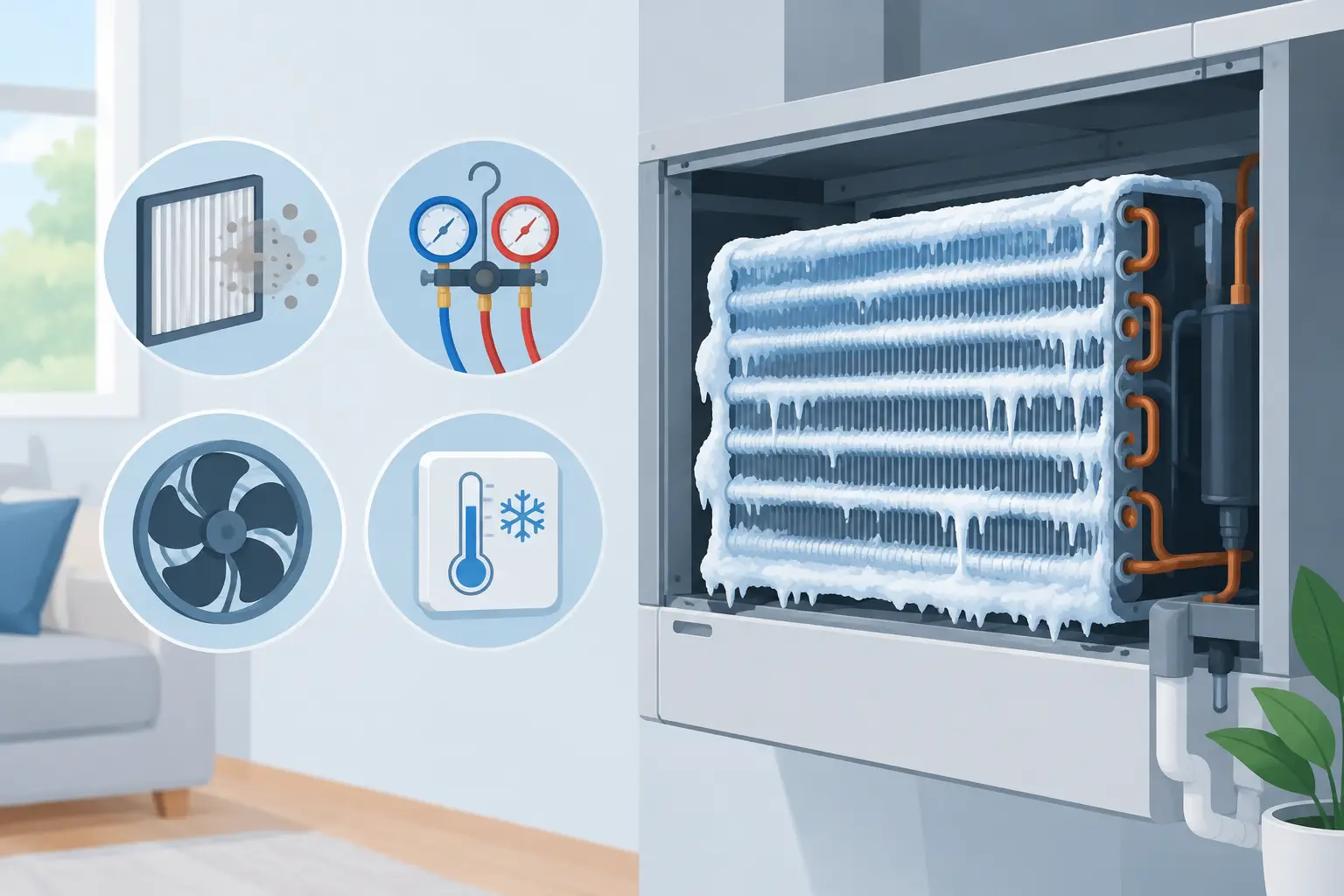
A frozen AC coil can look like a minor problem at first: weak airflow, a little extra humidity, or air that is not quite as cold as it was yesterday. Then the system stops cooling during a Nebraska heat wave, and you may find ice packed around the indoor unit or water collecting near the furnace. The top causes of frozen evaporator coils usually come down to an airflow issue, a refrigerant problem, or an operating condition the system cannot handle safely.
The evaporator coil is the indoor coil that absorbs heat from your home’s air. For it to work properly, warm air must move across the coil while refrigerant circulates through it at the correct pressure. When either part of that process is off, the coil temperature can drop below freezing. Moisture in the air then freezes on the coil, creating a layer of ice that blocks even more airflow.
Turning the thermostat lower will not solve it. In most cases, that only gives the ice more time to build up. Here is what commonly causes the problem, what you can safely do, and when it is time to call a licensed HVAC technician.
Top Causes of Frozen Evaporator Coils
A dirty air filter or restricted return airflow
A clogged filter is one of the most common and preventable reasons an evaporator coil freezes. Your air conditioner needs a steady volume of indoor air moving across the coil. When a filter is overdue for replacement, the blower has to work harder and less warm air reaches the coil. The refrigerant inside becomes too cold, and frost begins to form.
A dirty filter is not the only airflow restriction. Closed or blocked return vents, furniture pushed against registers, a collapsed flex duct, or a blower motor that is not running at the right speed can create the same condition. In rental homes and commercial spaces, blocked returns are especially easy to miss after furniture changes or tenant turnover.
Check the filter first, but do not assume a clean-looking filter rules out an airflow problem. A technician may need to inspect the blower, ductwork, returns, and coil condition to find the restriction.
A dirty evaporator coil
Even with a clean filter, dust can collect on the evaporator coil over time. Pet hair, household dust, construction debris, and airborne contaminants form a coating that insulates the coil from the air moving past it. Heat cannot transfer properly, so the coil runs colder than it should and can freeze.
This problem often develops gradually. You may notice longer cooling cycles, reduced airflow, rising energy bills, or rooms that never seem to reach the thermostat setting. By the time ice is visible, the coil may be heavily restricted.
Coil cleaning is not a job to handle with a household brush or harsh chemical cleaner. The coil fins are delicate, access can be limited, and improper cleaning can damage the equipment or create a drainage issue. Professional maintenance catches buildup before it turns into a no-cooling call.
Low refrigerant from a leak
Air conditioners do not use up refrigerant like a car uses fuel. If the refrigerant level is low, there is usually a leak somewhere in the system. Low refrigerant pressure makes the evaporator coil colder, allowing it to freeze even if airflow is otherwise normal.
A refrigerant leak can happen at a coil, line connection, service valve, or another component. Some leaks are small and show up only after months of declining performance. Others cause a sudden loss of cooling. You may hear hissing, see oily residue around refrigerant lines, or notice that the outdoor unit runs for long periods without bringing the indoor temperature down.
Adding refrigerant without finding the leak is not a real repair. It may provide temporary cooling, but the problem will return and the system can suffer more damage. A proper service visit includes diagnosing the source, discussing the repair options clearly, and verifying that the system is operating at the correct pressures afterward.
Blower or ductwork problems
Your blower moves conditioned air through the home. If the motor is failing, the capacitor is weak, the wheel is dirty, or the control settings are wrong, airflow can drop enough to freeze the coil. Unlike a blocked filter, this issue may not be obvious from the outside.
Ductwork can also be responsible. Leaky ducts, damaged ducts, undersized returns, or poor airflow balance can starve the system of the air it needs. This is more common in additions, finished basements, older Omaha homes, and properties where the original HVAC system has been modified over the years.
The right fix depends on the cause. Sometimes it is a straightforward blower repair. Other times, the system needs a duct correction or airflow adjustment. A good diagnosis matters because replacing parts before confirming the restriction can waste money and leave the freezing problem unresolved.
A clogged condensate drain or drainage issue
As your AC removes humidity from the air, water drains away through a condensate line. When that line clogs, water can back up in the drain pan. Depending on the setup, the system may shut down through a safety switch, leak around the indoor unit, or develop conditions that contribute to ice and poor operation.
Drain problems are especially common during humid weather, when the system is removing a lot of moisture. Algae, dust, and debris can build up inside the line. If you see water around the furnace or air handler, treat it as a service issue before flooring, ceilings, or equipment are damaged.
Running the AC when it is too cool outside
Air conditioners are designed to operate within a certain outdoor temperature range. Running central AC during a cool evening or early spring day can lower system pressures enough to freeze the evaporator coil, particularly if there is already a minor airflow or refrigerant issue.
This does not mean every cool-weather cooling call will damage your equipment. Some systems are set up for specialized low-ambient operation. Most standard residential systems are not. If your home feels warm on a mild day, try ventilation, ceiling fans, or a thermostat adjustment before running the AC for extended periods.
Thermostat, control, or equipment sizing issues
A thermostat that is poorly located, incorrectly programmed, or malfunctioning can make an AC system run longer than it should. Control problems may keep the blower from operating correctly or cause the outdoor and indoor equipment to run out of sequence.
System sizing can also play a role, although it is not the first thing to assume. An oversized unit may cool a home too quickly without removing enough humidity, while an undersized or poorly designed system can run constantly in extreme heat. Either situation can expose underlying airflow problems. Proper sizing requires more than matching the new equipment to the old unit’s label.
What to Do When You See Ice on Your AC
First, turn the cooling mode off. Do not keep running the air conditioner in hopes that it will push through the problem. Continued operation can strain the compressor, and that can turn a manageable repair into a much more expensive one.
Set the thermostat fan to ON if it will run normally. This may help thaw the indoor coil faster by moving room-temperature air across it. Replace a visibly dirty filter and make sure supply and return vents are open and unobstructed. Then give the system time to thaw completely. Depending on how much ice has formed, that can take several hours.
Do not chip at the ice, use a hair dryer, or pour hot water into the equipment. Those shortcuts can bend coil fins, damage electrical parts, and create water problems. Also avoid restarting the AC as soon as the visible ice disappears. The coil and drain pan may still be cold and wet inside the cabinet.
When to Schedule Professional AC Service
If the coil freezes again after you replace the filter and allow the system to thaw, it needs professional attention. The same is true if you hear unusual noises, find water around the indoor unit, smell something burning, have weak airflow from multiple vents, or the system is not cooling after thawing.
For Omaha homeowners, landlords, and small-business owners, a frozen coil is worth addressing quickly. A comfortable home matters, but so does protecting the compressor and avoiding a larger breakdown when summer temperatures are at their highest. Midlands Heating & Air can diagnose the immediate cause, explain the repair in plain language, and provide upfront options without pressure to replace equipment that can be repaired.
A frozen coil is your system’s way of telling you something is out of balance. Shut the cooling off, let it thaw, handle the simple airflow checks, and get help before a small restriction or leak leaves you without AC when you need it most.
RELAX! We offer flexible financing options!
