When Is Multi Unit HVAC Replacement Worth It?
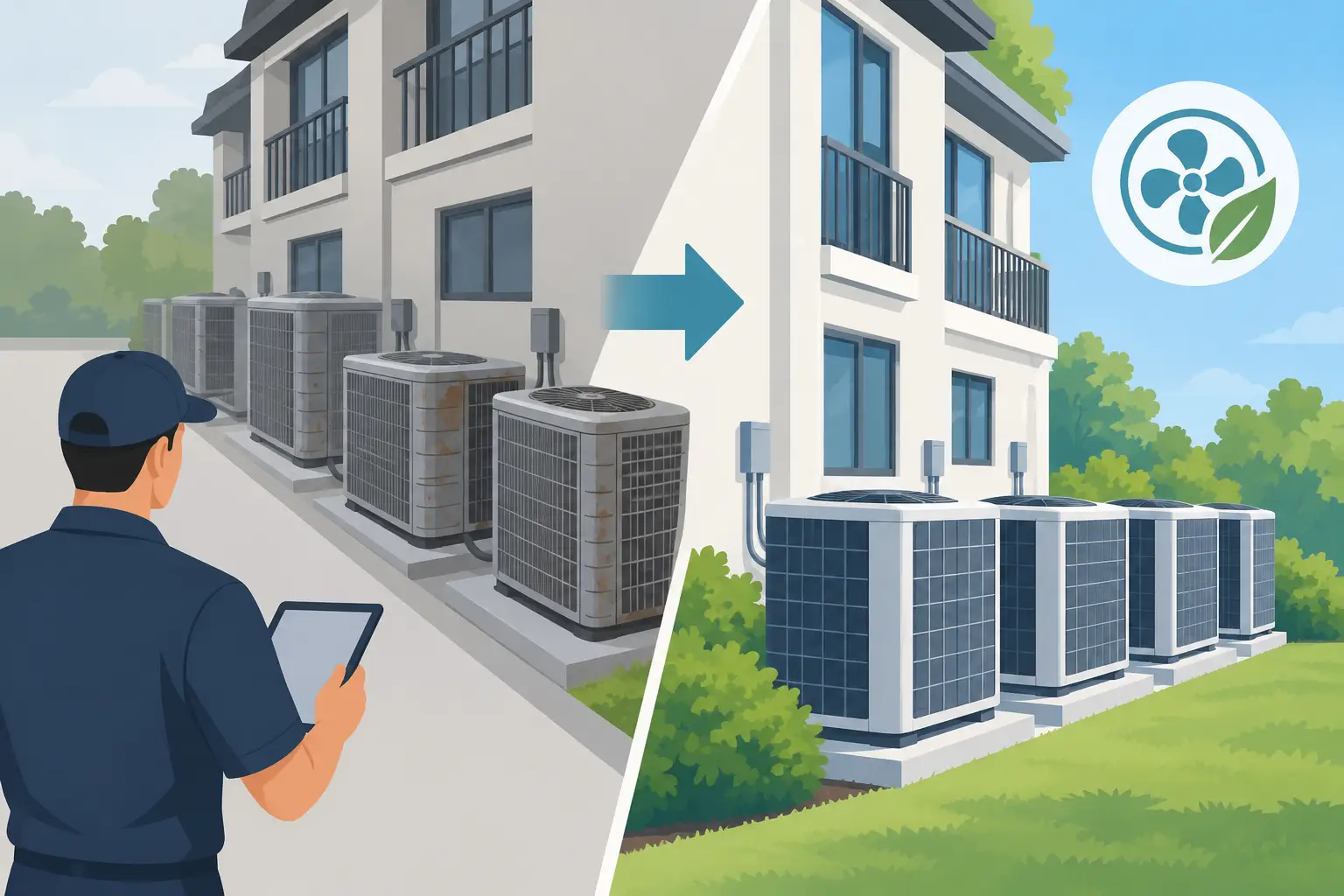
A failed air conditioner in one apartment is inconvenient. Three failing systems across a property during an Omaha heat wave can quickly become a tenant-relations problem, a budget problem, and an emergency scheduling problem. A planned multi unit HVAC replacement gives owners more control over all three – but only when it is based on the condition of each system, not a blanket assumption that every unit needs to go at once.
For landlords, property managers, and small-business owners, the right approach is usually a clear equipment assessment followed by a realistic replacement schedule. Some properties benefit from replacing every aging system in one project. Others are better served by phasing the work over one or two seasons while keeping reliable equipment in service.
What Multi Unit HVAC Replacement Usually Means
Multi unit HVAC replacement means replacing heating and cooling equipment across several apartments, rental homes, offices, or areas of a commercial property. The equipment might include furnaces and central air conditioners, heat pumps, PTAC units, ductless mini-splits, thermostats, or air handlers.
It does not always mean installing one large system to serve the whole building. In many Omaha rental properties, each unit has its own furnace and AC condenser or heat pump. Those systems may be the same age, but they may not be in the same condition. A ground-floor unit with heavy sun exposure, pets, or clogged filters can wear differently than an identical system upstairs.
That distinction matters. Replacing equipment simply because it reaches a certain birthday can waste money. Waiting until every system fails, however, can leave you making rushed decisions during extreme weather and paying for repeated emergency calls.
Signs It Is Time to Plan a Multi Unit HVAC Replacement
Repeated repairs are one of the clearest warning signs, especially when multiple systems have needed major parts in the last year or two. A single repair does not automatically mean replacement is the smarter choice. But when older equipment begins cycling through blower motors, control boards, refrigerant leaks, compressors, or heat exchangers, the repair costs and disruption add up fast.
Age is another factor. Most HVAC equipment has a limited service life, but maintenance history, installation quality, and usage all affect how long it lasts. A well-maintained system can outlast expectations. An ignored system may become unreliable much sooner. The goal is not to replace a unit just because it is old. The goal is to avoid putting too much money into equipment that is becoming expensive to keep dependable.
Pay attention to tenant complaints as well. Uneven temperatures, rooms that never cool down, persistent humidity, unusually high utility bills, loud operation, and frequent thermostat issues can point to equipment that is no longer performing as it should. In winter, any concern involving a furnace’s safe operation deserves prompt professional attention.
When several units are nearing the same point in their life cycle, a planned project often makes more sense than a string of last-minute replacements. It allows you to compare equipment options, schedule access with tenants, and set a budget before Nebraska weather forces the issue.
Start With an Equipment-by-Equipment Assessment
Before choosing a replacement plan, build a simple picture of what is installed and how each system is performing. This is where property owners can avoid two common mistakes: replacing good equipment too early or treating a failing system as an isolated event when it is part of a broader pattern.
For each unit, document the equipment age, model, fuel type, repair history, known comfort complaints, maintenance record, and any recurring issue. A qualified HVAC technician can also evaluate capacity, airflow, electrical condition, refrigerant performance, venting, ductwork, and controls.
Capacity deserves special attention. Installing the same size equipment that was there before is not always correct. Building updates, insulation changes, window replacements, additions, occupancy, and duct issues can all affect heating and cooling needs. Oversized equipment can short-cycle and struggle with humidity. Undersized equipment can run constantly without keeping occupants comfortable.
A thorough assessment also identifies work that should be handled during replacement. A new furnace or heat pump cannot compensate for damaged ductwork, poor return-air paths, unsafe venting, or an outdated thermostat setup. Addressing those concerns at the same time may cost more upfront, but it can prevent a new system from inheriting the old system’s problems.
Decide What Should Be Replaced First
A phased plan is often the practical answer when budgets are limited or systems have different conditions. Start with equipment that creates the highest risk: units that are unsafe, unreliable during peak weather, expensive to repair, or tied to repeated tenant complaints.
Next, consider the operational impact. A system serving a long-term tenant, a unit with a vulnerable occupant, or a business area that cannot easily close may deserve priority even if another system is slightly older. For vacant units, replacement can be scheduled between tenants and completed with less disruption.
When several systems are identical in age and condition, replacing them in groups can simplify planning and future maintenance. Using compatible equipment and controls can make it easier to stock filters, train maintenance staff, and track service history. Still, standardization should not override proper sizing or the specific needs of each space.
Choosing Equipment for Omaha Weather
Omaha equipment needs to handle hot, humid summers and winters that can turn dangerous when a furnace stops running. Efficiency matters, but it should be weighed alongside reliability, proper installation, available parts, and the needs of the property.
For some properties, a high-efficiency furnace and central AC system is the right fit. For others, a heat pump paired with a backup heat source may offer an effective all-electric or hybrid option. PTAC units can make sense in certain lodging-style or individually conditioned spaces, while ductless mini-splits can solve comfort problems in additions, converted rooms, or areas without ductwork.
The best choice depends on the building, not a sales script. Higher-efficiency equipment can reduce operating costs, but the extra investment may not pay back at the same rate in every property. A straightforward contractor should explain the differences clearly, show the options, and let you decide without pressure.
Smart thermostats may also be worth considering, particularly for common areas, vacant units, or properties where temperature settings are frequently adjusted. They can provide better scheduling and visibility, but they need to be selected and installed thoughtfully. Not every thermostat works with every system, and tenant access should be discussed before installation.
Plan the Work Around Tenants and Daily Operations
Good project planning is as important as the equipment itself. Replacing multiple HVAC systems involves access to apartments, electrical panels, mechanical rooms, outdoor condensers, and sometimes attics, crawlspaces, or rooftops. Clear scheduling keeps the process respectful and prevents avoidable delays.
Give tenants advance notice, explain the expected work window, and let them know whether heating or cooling will be temporarily unavailable. During severe weather, schedule replacements in a way that limits downtime as much as possible. If a system must be shut down for longer, discuss temporary comfort options and practical accommodations beforehand.
For a small business, plan around customer traffic, staff schedules, and any areas that need continuous heating or cooling. A restaurant, office, daycare, or retail space may need a different sequence than an apartment building. The lowest bid is not always the lowest overall cost if it creates unnecessary closures, tenant complaints, or return visits.
Look Beyond the Installation Price
A multi-system project should come with a clear written scope of work. It should identify the equipment being installed, major labor items, permits when required, thermostat work, removal of old equipment, and any recommended duct, electrical, or venting corrections. Upfront pricing makes it easier to compare options honestly.
Ask about warranty coverage, expected maintenance needs, filter sizes, and what service support will look like after installation. New equipment still needs regular maintenance. Dirty filters, blocked drains, neglected outdoor coils, and ignored warning signs can shorten the life of even a well-installed system.
It is also reasonable to compare repair costs against replacement costs on a unit-by-unit basis. If an older system needs a modest repair and has otherwise been dependable, repair may be the sensible call. If the same system has a history of breakdowns and now needs a costly major component, replacement may offer more predictable costs and fewer after-hours emergencies.
Get a Plan You Can Actually Use
Property owners do not need a one-size-fits-all replacement proposal. They need a clear answer about which systems need attention now, which ones can safely remain in service, and what the next two to five years may look like. That is the kind of practical guidance Midlands Heating & Air provides, with licensed local technicians, clear communication, and zero-pressure recommendations.
A thoughtful replacement plan turns an unpredictable series of breakdowns into manageable work. Start before the first deep freeze or the first stretch of 90-degree days, and you will have more choices, better scheduling options, and a much better chance of keeping every space comfortable.
RELAX! We offer flexible financing options!
