
Why Does HVAC Smell? Causes and What to Do
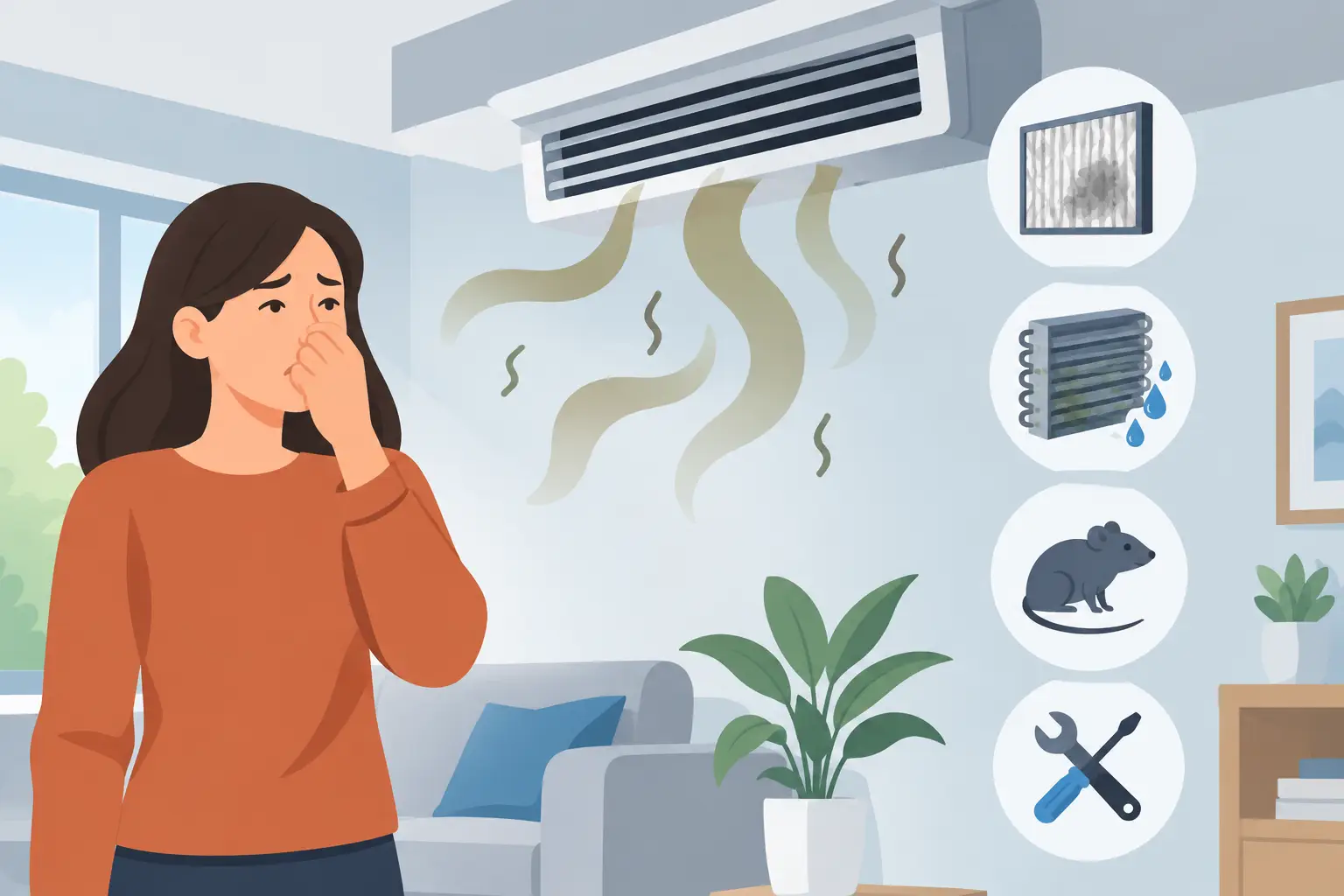
That first blast of air from a vent can tell you a lot. If you are asking, “why does HVAC smell,” the answer may be as simple as dust burning off after a long Nebraska summer. But certain odors point to moisture, an electrical problem, a gas leak, or another issue that should not wait. The key is noticing what the smell resembles, when it appears, and whether it goes away.
A brief, mild odor is not always an emergency. A strong, persistent, or worsening smell is different. Do not try to cover it with air freshener and hope for the best, especially when your furnace is running during a deep freeze or your AC is working hard through an Omaha heat wave.
Why Does HVAC Smell When It First Turns On?
When you turn on your furnace for the first time each fall, a dusty or slightly burning smell is common. Dust settles on the heat exchanger, burners, and nearby components while the system sits unused. As those parts warm up, the dust burns away.
This odor should fade within the first heating cycle or two. Replace a dirty filter, keep supply vents open, and give the system a little time to clear. If the smell is sharp, smoky, or still there after several cycles, turn the system off and have it checked. Normal dust should not make your home smell like melting plastic or an active fire.
The same idea can apply to electric heat strips in a heat pump or air handler. They may produce a light dusty smell after a long period without use, but the odor should be short-lived.
Musty or Dirty-Sock HVAC Smells
A musty smell usually means moisture is lingering where it should not. In cooling season, your indoor coil removes humidity from the air. Condensation should drain safely through the condensate line. If the drain is clogged, the pan is dirty, or the coil and surrounding insulation stay damp, mold and mildew can grow.
Some homeowners describe a “dirty sock” smell that appears when the AC starts and fades when it stops. That can happen when bacteria build up on an evaporator coil. It is unpleasant, but more importantly, it is a sign that the system needs cleaning and a closer look at drainage and humidity control.
A musty odor can also come from wet ductwork, a damp crawlspace or basement, or a filter that has been left in place too long. Replacing the filter may help, but it will not solve a drainage issue or contaminated coil. A technician can inspect the indoor unit, clean the appropriate components, and make sure water is moving where it belongs.
Burning, Electrical, or Plastic Smells Need Attention
A faint dusty smell at startup is one thing. A smell like hot wiring, melting plastic, burnt rubber, or an overheated appliance is another. These odors can be caused by a failing blower motor, worn wiring, a loose electrical connection, a damaged capacitor, or debris near a heat source.
If you notice this smell, shut the system off at the thermostat. If you see smoke, hear popping, or smell a strong burning odor, turn off power to the equipment only if it is safe to do so and call for service right away. If there is any sign of fire, leave the home and call 911.
Do not keep resetting a breaker or restarting the unit to see whether the odor returns. Repeatedly forcing a system to run can turn a repairable electrical issue into a larger equipment failure.
Rotten Egg, Exhaust, or Gas Smells
Natural gas is treated with a sulfur-like odorant so leaks are easier to detect. If your furnace area or home smells like rotten eggs, do not use light switches, appliances, phones near the odor, or anything that could create a spark. Leave the building, call your gas utility or 911 from a safe location, and arrange for an HVAC inspection once the utility confirms it is safe.
An exhaust-like smell around a gas furnace also deserves prompt attention. A properly operating furnace vents combustion gases outside. Problems with venting, burners, or the heat exchanger can affect safe operation. Carbon monoxide itself has no smell, so do not rely on odor alone to protect your household.
Every home with fuel-burning equipment should have working carbon monoxide detectors installed according to manufacturer instructions and local requirements. If a carbon monoxide alarm sounds, get everyone outside immediately and call 911. Pets should leave with you.
Sewer, Urine, or Dead-Animal Odors
Not every HVAC smell starts inside the equipment. A sewage odor may be coming from a dry floor drain, plumbing vent issue, or a drain connection near the air handler. When the blower runs, it can pull that odor into living areas and make it seem like the HVAC system caused it.
A urine-like or decaying odor can point to pests in ductwork, near the indoor unit, or around an outdoor condenser. Small animals sometimes enter accessible duct sections or build nests around equipment. If an odor is strongest at one vent, that location gives a technician a useful clue.
Avoid spraying disinfectant or fragrance directly into vents. It may mask the smell briefly, but it does not remove the source and can introduce chemicals into the air you breathe. The right fix depends on whether the issue is inside the duct system, the mechanical equipment, or somewhere else in the building.
Chemical or Sweet Smells From an AC or Heat Pump
A chemical, sweet, or solvent-like odor can have several causes. Cleaning products, paint, stored household chemicals, and even a nearby vehicle can be drawn into return-air openings. Check whether the smell began after a project in the garage, basement, or utility area.
Still, do not assume it is harmless. Refrigerant leaks can sometimes create an unusual chemical smell, though odor alone cannot confirm one. Other signs include weak cooling, ice on refrigerant lines or the indoor coil, hissing sounds, and a system that runs longer than usual without bringing the temperature down.
Refrigerant work requires trained, properly equipped service. A technician should find the source of a leak, explain the repair options clearly, and verify system performance rather than simply adding refrigerant and sending you on your way.
What to Do When Your HVAC Has a Strange Smell
Pay attention to the pattern before you call. Does the odor happen only in heating mode, only with cooling, or whenever the blower runs? Is it strongest near one vent, the furnace room, or throughout the building? Those details help narrow down the cause and can save time during diagnostics.
For a mild dusty smell after seasonal startup, replace the filter if needed and monitor it for a cycle or two. For a musty odor, check for visible water around the indoor unit and avoid letting a clogged drain continue to run. For anything electrical, smoky, gas-like, or associated with a carbon monoxide alarm, treat it as urgent.
Regular maintenance is one of the best ways to reduce surprise odors. A seasonal visit can catch dirty coils, blocked drains, worn electrical parts, restricted filters, and combustion concerns before they become a no-heat call on the coldest night of the year. It also gives homeowners, landlords, and property managers a clearer picture of what needs attention now and what can reasonably wait.
If the smell is persistent or you are not sure whether it is safe, trust that instinct. Midlands Heating & Air can inspect the system, explain what is causing the odor, and provide upfront options without pressure. A home should smell like home, not like something is overheating, leaking, or growing where it should not.
RELAX! We offer flexible financing options!
