Why Is My Furnace Blowing Cold Air at Home?
A Nebraska winter night is a bad time to find cool air coming from the registers. If you are asking, “why is my furnace blowing cold air,” the answer may be as simple as a thermostat setting or as serious as a safety shutdown. The key is knowing what you can check safely, what the furnace is trying to tell you, and when it is time to call a licensed technician.
A furnace does not always deliver hot air the moment it turns on. But if the air stays cold, the temperature in your home keeps dropping, or the system repeatedly shuts off, do not wait for the problem to become an emergency.
Why Is My Furnace Blowing Cold Air?
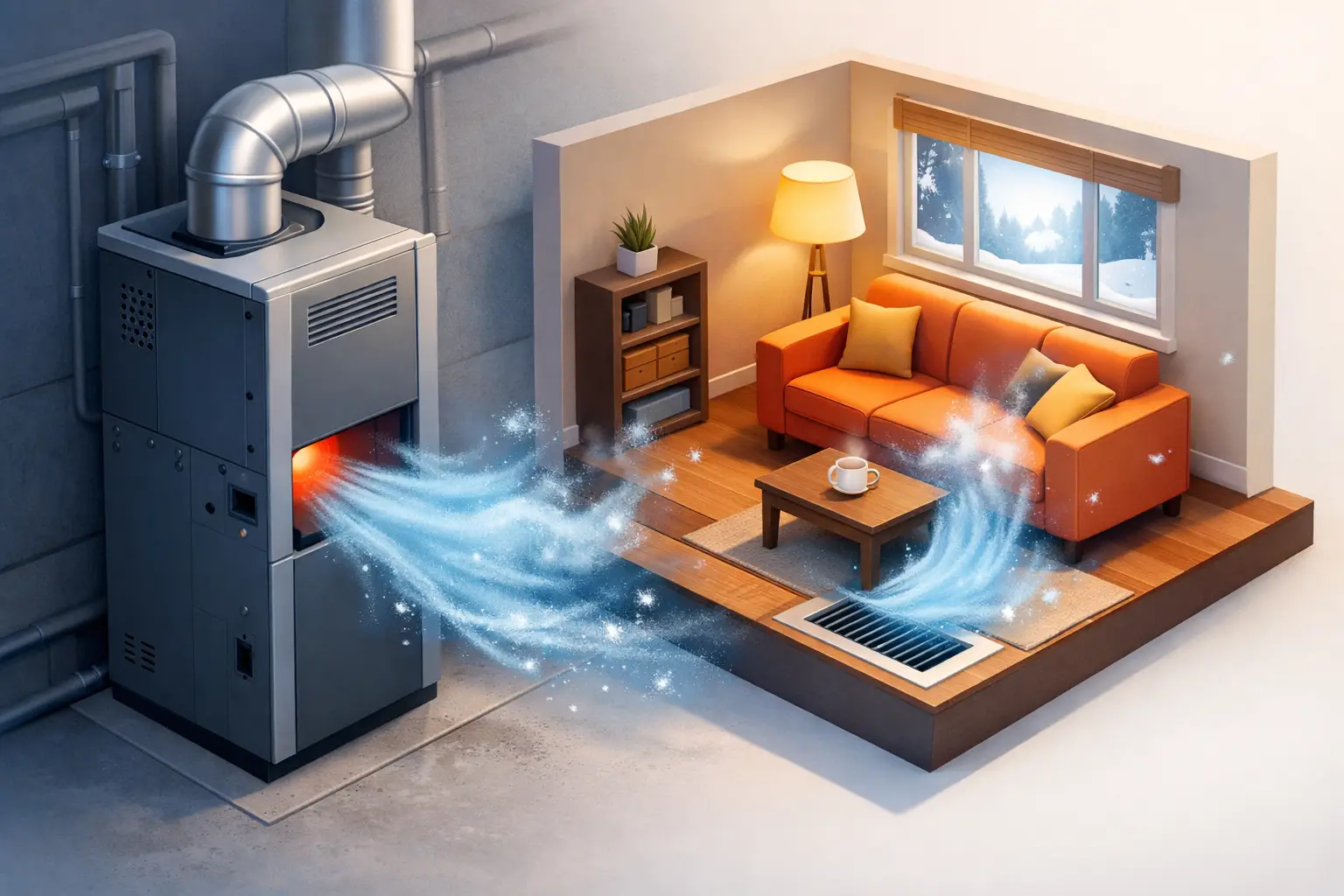
Your furnace has to complete a specific sequence before it can safely heat your home. The thermostat calls for heat, the system starts its draft fan, the ignition system lights the burners, the heat exchanger warms up, and then the blower sends heated air through the ducts. A problem at any point in that sequence can leave you with cold air.
Sometimes the furnace is running normally but the blower is set to run continuously. Other times, a dirty filter, blocked vent, failed ignition component, overheating condition, or fuel issue is preventing the burners from producing heat. Furnaces are designed to shut down or limit operation when they detect an unsafe condition. That is frustrating during a deep freeze, but it is a protection feature, not something to bypass.
The Thermostat Fan May Be Set to “On”
Start with the easiest possibility. If the thermostat fan setting is switched to “On,” the blower may run between heating cycles. That air can feel cold because it is simply moving room-temperature air through the ducts.
Set the fan to “Auto.” In Auto mode, the blower runs only when the furnace is actively heating, with a short delay after the burners turn off. Also confirm the thermostat is set to “Heat” and the temperature is several degrees above the current room temperature. If the screen is blank, replace the batteries if your thermostat uses them.
The Furnace Is Still Warming Up
When a furnace begins a heating cycle, it may take a minute or two before warm air reaches the vents. The blower waits for the heat exchanger to warm up so it does not push a blast of cold air through the house.
If the air becomes warm shortly after startup and the house reaches the set temperature, there may not be a problem. If it never gets warm, or it starts warm and quickly turns cold, further troubleshooting is needed.
A Dirty Air Filter Is Restricting Airflow
A clogged filter is one of the most common causes of furnace trouble. Restricted airflow can make the furnace overheat. When that happens, a safety limit switch may shut the burners off while the blower continues running to cool the system down. To the homeowner, it can look like the furnace is blowing cold air.
Check your filter and replace it if it is visibly dirty, gray, or packed with dust and pet hair. Most homes benefit from checking filters monthly and replacing them on the schedule recommended for the filter type and household conditions. Homes with pets, remodeling dust, or several occupants often need more frequent changes.
Do not run a furnace without a filter, and do not use an overly restrictive filter unless your system is designed for it. A high-efficiency filter can be useful, but the wrong one can reduce airflow and create new problems.
The Pilot Light or Ignition System Is Not Working
Older furnaces may use a standing pilot light. If it has gone out, the burners cannot light. Newer systems typically use an electronic igniter or flame sensor. These parts are small, but they are essential to the heating cycle.
A dirty flame sensor is a frequent repair. The burners may ignite briefly, then shut off because the control board cannot verify a stable flame. A failed igniter, damaged wiring, faulty gas valve, or control-board problem can create similar symptoms. These are not DIY repairs. Gas-fired equipment should be diagnosed by a qualified HVAC technician who can test the system safely.
The Furnace Is Overheating and Cycling Off
If your furnace blows warm air for a few minutes, then cold air, then repeats the pattern, it may be overheating. A dirty filter is one possible cause, but so are closed supply vents, blocked return-air grilles, a dirty blower wheel, undersized ductwork, or a failing blower motor.
Avoid closing too many vents in unused rooms. Furnaces are sized and adjusted for a certain amount of airflow. Closing vents does not always save energy, and it can create pressure and overheating issues. Make sure return grilles are clear of furniture, rugs, boxes, and other household items.
The Outdoor Intake or Exhaust Vent Is Blocked
High-efficiency furnaces often vent through PVC pipes that exit near the outside of the home. Snow, ice, leaves, animal nests, or other debris can block the intake or exhaust. When the furnace cannot vent properly, it may shut down for safety.
From a safe, ground-level position, look for obvious snow or debris around the exterior vent openings. Do not disassemble vent pipes, insert objects into them, or attempt repairs on the roof. If snow is drifting against the house during an Omaha storm, keeping those exterior openings clear can prevent a no-heat call.
The Fuel Supply or Electrical Power Has Been Interrupted
For a gas furnace, check whether the gas shutoff valve near the unit is in the open position. The handle should generally be parallel with the pipe. Do not turn gas valves on and off repeatedly, and never attempt to relight or repair gas components if you smell gas.
For any furnace, check the electrical panel for a tripped breaker and look for the furnace service switch, which can resemble a regular light switch near the equipment. If a breaker trips again after being reset once, leave it alone and call for service. Repeated tripping can point to an electrical fault, a failing motor, or another issue that needs professional diagnosis.
Safe Checks Before You Call for Furnace Repair
A few basic checks can save time and may restore heat without a repair visit. Keep the steps simple: verify the thermostat is set to Heat with the fan on Auto, install a clean filter, make sure supply vents and return grilles are open, check the breaker and furnace switch, and clear visible snow from exterior PVC vent openings.
Then give the system one normal heating cycle to respond. Avoid repeatedly turning the thermostat up and down or cycling power to the furnace over and over. That can make diagnosis harder and may place additional strain on the equipment.
If your furnace has a diagnostic light visible through a small panel window, note the flash pattern before calling. The code can help a technician narrow down the issue, though it is not a complete diagnosis by itself. Never remove burner-compartment panels or defeat door switches to investigate further.
When Cold Air Is an Emergency
Turn the furnace off and seek help right away if you smell natural gas, notice a burning or electrical smell, see soot around the furnace, hear loud banging or grinding, or your carbon monoxide alarm activates. Get everyone outside immediately if a carbon monoxide alarm sounds or anyone has symptoms such as headache, dizziness, nausea, confusion, or unusual fatigue. Call emergency services from outside the home when appropriate.
A furnace that simply will not heat is also urgent when outdoor temperatures are dangerously low, especially for households with young children, older adults, pets, or vulnerable tenants. Landlords and property managers should treat a no-heat report as a priority. Cold indoor temperatures can quickly lead to discomfort, frozen pipes, and property damage.
What a Professional Furnace Diagnosis Should Include
A proper furnace repair visit should be more than swapping a part and hoping for the best. A technician should inspect the filter and airflow, verify thermostat operation, check the ignition sequence, test safety switches, inspect venting, and confirm the burners and blower are operating correctly. On gas furnaces, combustion and carbon monoxide safety matter just as much as restoring warm air.
The repair recommendation depends on the cause, the age of the furnace, the condition of the heat exchanger, and the cost of the repair compared with remaining equipment life. A newer furnace with a dirty flame sensor may need a straightforward repair. An older system with repeated failures or a compromised heat exchanger may call for a larger conversation. You deserve upfront pricing and clear options, not pressure to replace equipment that can be repaired responsibly.
Midlands Heating & Air helps Omaha-area homeowners, property owners, and small businesses get to the actual cause of a heating problem with licensed technicians, straightforward communication, and 24/7 emergency response when the weather will not wait.
Warm air should return after a simple setting or filter correction. If it does not, trust the furnace’s warning signs and get the system checked before a cold-air problem turns into a no-heat night.
[addtoany]RELAX! We offer flexible financing options!
