
Heat Pump Versus Furnace: Omaha Home Guide
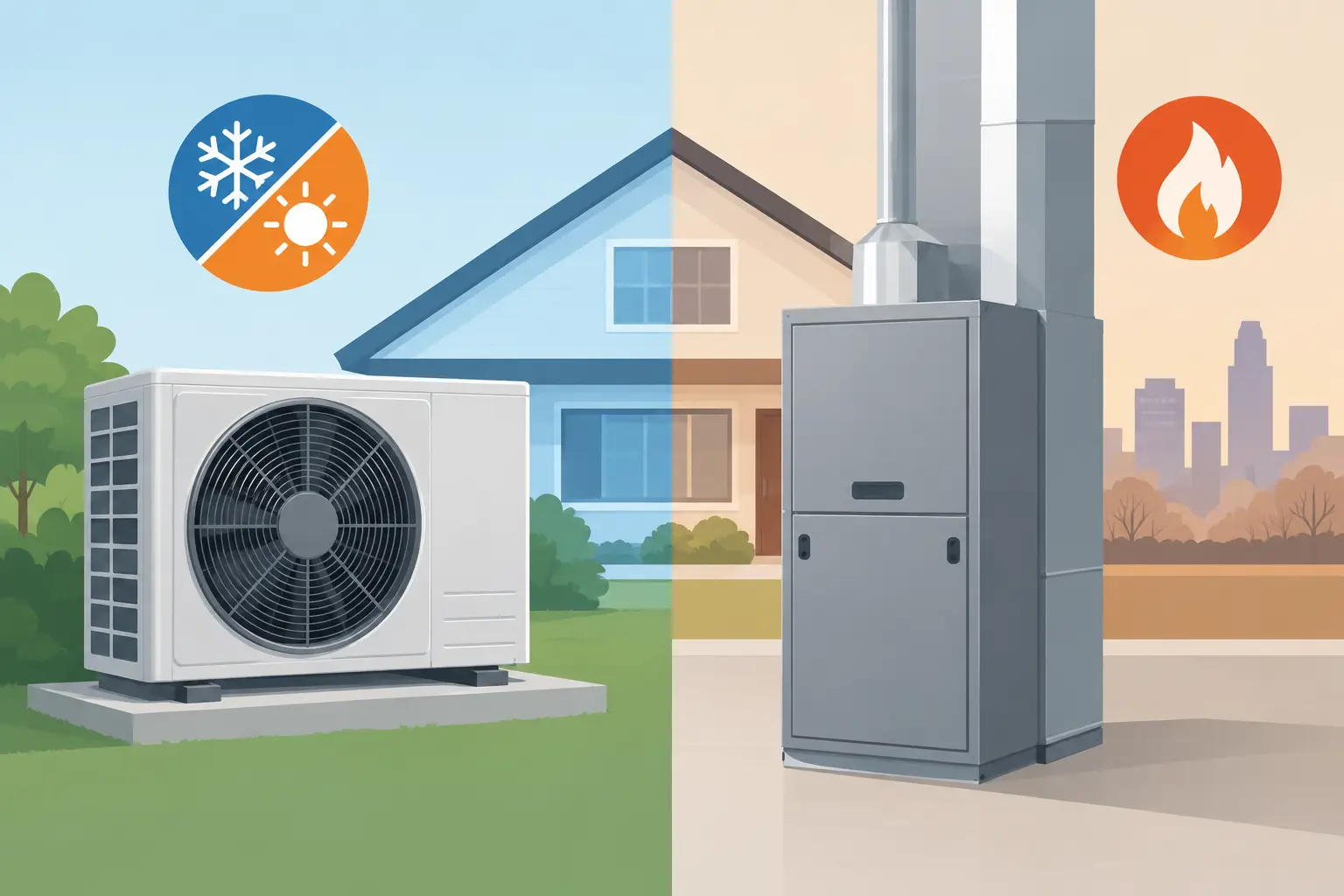
A heat pump versus furnace decision gets real fast when your current heater quits on a January night in Omaha. Both can keep your home comfortable, but they produce heat differently, carry different operating costs, and fit different homes. The right answer is not always the unit with the highest efficiency rating or the lowest initial price. It is the system that fits your home, fuel options, budget, and expectations during Nebraska weather.
Heat Pump Versus Furnace: The Core Difference
A gas furnace creates heat by burning natural gas or propane. It sends that heated air through your ductwork and into the home. Furnaces are built for strong, dependable heating in very cold weather, which is why they remain common across Omaha and surrounding communities.
A heat pump moves heat rather than generating it through combustion. During winter, it collects available heat from outdoor air and transfers it indoors. In summer, it reverses direction and works like an air conditioner, moving heat out of the house. One system handles both heating and cooling.
That difference matters most when temperatures drop. A furnace does not lose heating capacity simply because it is bitterly cold outside. A heat pump can still heat in cold weather, especially a modern cold-climate model, but it becomes less efficient as outdoor temperatures fall. Many heat-pump systems use electric auxiliary heat to help during extreme cold or defrost cycles.
Which System Handles Omaha Winters Better?
For raw heating power during a deep freeze, a properly sized gas furnace has the advantage. It delivers hot supply air and maintains output even when wind chills are well below zero. If your home already has a gas line and ductwork, replacing an aging furnace with a high-efficiency model is often the straightforward choice.
That does not mean heat pumps are off the table in Omaha. Today’s cold-climate heat pumps perform far better in low temperatures than older models did. They can provide efficient heat through much of a typical winter, while a backup heat source covers the coldest stretches. The key is proper equipment selection and installation, not a broad promise that every heat pump works the same everywhere.
A heat pump may be especially appealing if you need both a new air conditioner and new heating equipment. Instead of installing a separate AC unit and furnace, you may choose a heat pump for year-round comfort. If you have natural gas, a dual-fuel setup can also make sense: the heat pump handles moderate weather efficiently, and a gas furnace takes over when temperatures reach a preset point.
Do not size equipment by square footage alone
A heating system that is too small may struggle on the coldest days. One that is too large can short-cycle, create uneven temperatures, and wear out sooner. Square footage is only one part of the equation. Insulation levels, window quality, duct condition, ceiling height, sun exposure, air leakage, and the number of occupants all affect the load your system must handle.
Before recommending replacement equipment, a qualified HVAC technician should evaluate the home rather than simply match the size of the old unit. The old system may have been oversized or undersized from day one.
Upfront Cost and Monthly Operating Cost
The purchase price is often where homeowners start, but it should not be where the comparison ends. A furnace replacement can cost less up front when the home already has central air in good shape and only the furnace needs replacement. If both the furnace and air conditioner are near the end of their service life, comparing complete system options gives a clearer picture.
Heat pumps can cost more initially, particularly cold-climate models or dual-fuel systems. They may reduce heating costs during milder weather because they move heat instead of creating it. However, savings depend on local electricity and natural-gas rates, the home’s insulation, thermostat settings, equipment efficiency, and how often backup electric heat runs.
A high-efficiency gas furnace can also lower fuel use compared with an older, less efficient unit. For homes with access to reasonably priced natural gas, the furnace may remain the more predictable choice for winter heating costs. For an all-electric home, a heat pump is usually much more economical than electric resistance heat.
Ask for an estimate that separates equipment, installation work, needed duct or electrical upgrades, thermostat options, and any accessories. Upfront pricing makes it easier to compare choices without being pushed toward equipment you do not need.
Comfort Feels Different Between the Two
Furnaces generally produce warmer air at the vents. Many homeowners prefer that feeling, especially after coming in from the cold. A furnace also tends to recover indoor temperature quickly after a setback, such as turning the thermostat down overnight.
Heat pumps typically provide longer, gentler heating cycles. The air coming from the registers may feel less hot than furnace air, but the home can still remain comfortable. Some people appreciate the more even temperature. Others notice the difference immediately and prefer the stronger heat of a furnace.
Ductwork plays a major role in either system. Leaky, undersized, or poorly balanced ducts can make a new unit seem disappointing. Rooms over garages, upstairs bedrooms, additions, and areas with large windows often need attention beyond replacing the equipment itself.
Maintenance, Repairs, and Service Life
Both systems need professional maintenance. A furnace tune-up checks the burners, heat exchanger, venting, electrical components, safety controls, airflow, and carbon monoxide-related safety concerns. Homeowners should also replace filters on schedule and keep supply and return vents open and clear.
A heat pump needs maintenance for both heating and cooling operation. That includes checking refrigerant performance, electrical connections, the indoor and outdoor coils, drainage, defrost operation, airflow, and auxiliary heat controls. The outdoor unit must stay clear of leaves, snow buildup, and other debris.
Because a heat pump operates throughout the year, it can accumulate more run time than a furnace that only runs in the heating season. That does not automatically mean it will fail sooner, but it does make regular service more valuable. Planned maintenance helps catch small issues before they become an emergency call during a heat wave or freeze.
When a Furnace Is Usually the Better Fit
A furnace is often the practical choice when your home already uses natural gas, your existing AC still has useful life left, and you want maximum cold-weather heating confidence. It can also be the better option for homeowners who prefer hotter supply air, have experienced long cold snaps, or want a simpler replacement without changing the rest of the system.
For landlords and property managers, a like-for-like furnace replacement may also reduce downtime when a tenant has no heat. Availability, installation timing, and straightforward serviceability matter when comfort and habitability are on the line.
When a Heat Pump Makes Sense
A heat pump deserves serious consideration when you need to replace both heating and cooling equipment, want one system for all seasons, or do not have natural gas available. It can be a strong option for homeowners focused on electric efficiency and consistent comfort through spring and fall, when outdoor temperatures are moderate.
It is also worth considering for home additions, converted garages, and spaces without existing ducts. In those cases, a ductless mini-split heat pump may provide heating and cooling without the cost and disruption of extending central ductwork. For an Omaha home, discuss backup heat and cold-weather capacity before choosing the model.
Get Advice Based on Your Home, Not a Sales Script
The best heat pump versus furnace choice comes from looking at the whole house and the full cost of ownership. A good contractor should explain the trade-offs in plain language, provide options, and respect your budget. You should not have to accept a high-pressure recommendation when you are trying to restore heat.
If your current system is making unusual noises, cycling constantly, producing uneven heat, or nearing the end of its life, schedule an evaluation before the next severe weather event. Midlands Heating & Air can assess the equipment, explain repair and replacement options with upfront pricing, and help you choose a system that keeps your home comfortable when Omaha weather turns serious.
[addtoany]RELAX! We offer flexible financing options!
