
What Size Air Conditioner Does Your Omaha Home Need?
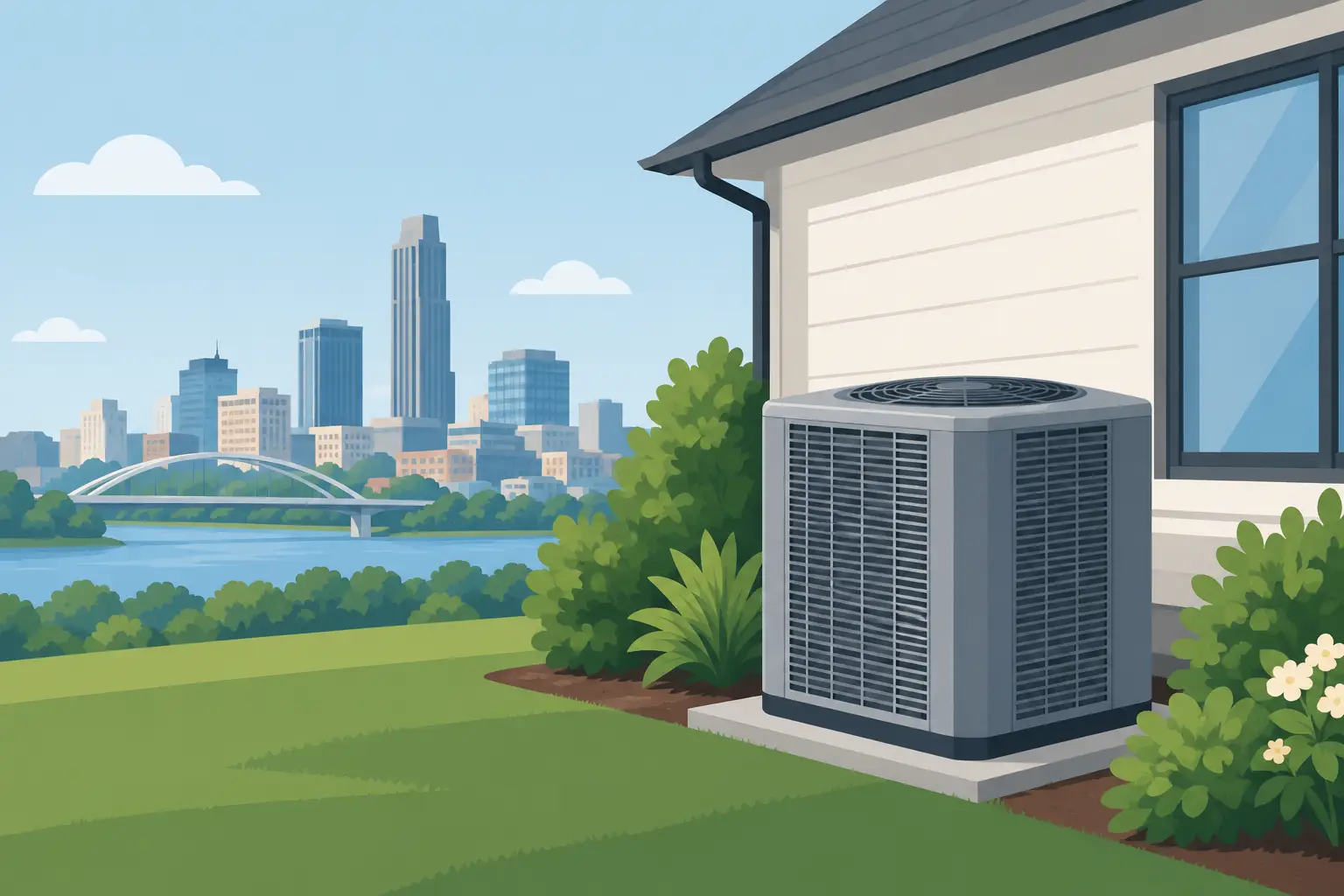
A 95-degree Omaha afternoon is a bad time to find out your air conditioner is the wrong size. If you are asking what size air conditioner your home needs, the answer is not simply based on square footage. A system that is too small may run constantly without catching up. One that is too large can cool the house quickly but leave it clammy, cycle on and off too often, and wear out sooner than it should.
The right answer comes from how your specific home gains heat, not from a one-size-fits-all chart. Square footage is a useful starting point, but it is only one piece of the calculation.
What Size Air Conditioner Means in HVAC Terms
Air conditioners are usually sized in tons or BTUs. One ton of cooling capacity equals 12,000 BTUs per hour. A 2-ton system provides 24,000 BTUs per hour, while a 3-ton system provides 36,000 BTUs per hour.
That does not mean a 2,000-square-foot home automatically needs a 2-ton unit or that every 1,000 square feet needs one ton. Nebraska homes vary widely. A shaded ranch with newer windows may need less cooling than a similarly sized two-story home with large west-facing windows, an unfinished attic, and poor insulation.
The goal is to choose a system that can handle the hottest expected conditions while running long enough to remove humidity effectively. Proper run time is a good thing. It gives the system time to circulate and dehumidify the air instead of blasting cold air for a few minutes and shutting down.
Why Square Footage Alone Can Lead to the Wrong Size
Quick sizing rules are tempting because they seem simple. They can provide a rough range, but they should not be the final decision for a replacement or new installation. The previous system size is not always reliable either. It may have been oversized from day one, or additions and insulation upgrades may have changed the home’s cooling needs.
A licensed HVAC professional should look at the factors that affect your actual cooling load, including:
- Total conditioned square footage and ceiling height
- Insulation levels in the attic, walls, and basement or crawlspace
- Window size, direction, condition, and shading
- Air leaks around doors, windows, attic penetrations, and ductwork
- Number of occupants, appliances, and heat-producing equipment
- Home layout, including open staircases, sunrooms, finished basements, and room additions
A house with vaulted ceilings contains more air than a house with standard eight-foot ceilings. A west-facing living room can take a serious beating from late-day summer sun. A finished attic, home office full of electronics, or kitchen that opens into the main living space can also shift the calculation.
For a properly sized replacement, the industry standard is a Manual J load calculation. This calculation uses the home’s construction, orientation, insulation, windows, and local design conditions to estimate how much cooling it truly needs. It takes more care than a rule of thumb, but it is the right way to avoid paying for equipment that does not fit the house.
Signs Your Current Air Conditioner May Be the Wrong Size
Comfort problems do not automatically mean the outdoor unit is too small or too large. Dirty filters, low refrigerant, failing capacitors, restricted airflow, duct leaks, thermostat problems, and neglected maintenance can all create similar symptoms. A technician should diagnose the immediate issue before anyone recommends new equipment.
Still, certain patterns can point to a sizing problem. An undersized system may run for hours on hot days and still leave indoor temperatures several degrees above the thermostat setting. It may cool some rooms but struggle with bedrooms upstairs or areas exposed to afternoon sun.
An oversized system often turns on, cools quickly, and shuts off in short cycles. The house may feel cool near the thermostat but humid or uneven elsewhere. Frequent short cycling can increase utility use and put unnecessary stress on electrical and mechanical components.
If the system has always struggled, a capacity review makes sense. If it used to work well and suddenly does not, repair may be the more sensible first step. Honest guidance means separating an equipment failure from a true sizing issue.
The Ductwork Matters as Much as the Unit
Even the right air conditioner size cannot overcome ductwork that is undersized, leaking, poorly insulated, or badly balanced. Cooling equipment needs enough airflow to do its job. If the return duct is too small, for example, the system may struggle to pull warm air back to the equipment. If supply ducts leak into an attic, you can lose cooled air before it reaches the rooms where your family needs it.
This is especially common when a home has been remodeled, when a basement was finished, or when an older system was replaced without reviewing the ducts. Adding a larger unit to weak ductwork can make the problem worse. Higher capacity requires more airflow, and the existing ducts may not be able to provide it.
A complete recommendation should account for the indoor coil, blower, refrigerant lines, electrical requirements, thermostat, and duct system. Replacing only the outdoor unit without confirming that those parts work together can lead to poor efficiency, early breakdowns, and manufacturer warranty concerns.
Choosing Between a Central AC, Heat Pump, or Mini-Split
Central air conditioning is a practical choice for many Omaha homes with existing forced-air ductwork. If your furnace and ducts are in good shape, a properly matched central system can provide dependable whole-home cooling.
A heat pump may be worth considering when it is time to replace both heating and cooling equipment. It cools your home in summer and provides efficient electric heat during milder weather. In our winter climate, many homes use a heat pump alongside a furnace for dependable backup heat during deep freezes.
Ductless mini-splits are often a strong solution for rooms that traditional ductwork does not serve well, such as additions, converted garages, finished attics, and certain rental units. They can also help solve persistent hot or cold spots without replacing an entire central system. The best option depends on the building, comfort goals, budget, and how long you plan to own the property.
How to Prepare for an Accurate Sizing Visit
Before requesting an estimate, make note of the rooms that are hardest to cool and when they feel uncomfortable. Mention recent remodeling, new windows, added insulation, or changes in household occupancy. If you have utility bills from last summer, they can provide useful context, although they do not replace a load calculation.
During the visit, expect questions about your home and your comfort concerns. A careful contractor may measure rooms, inspect the attic, look at the ductwork, and check the existing equipment. That process is not a sales delay. It is how a recommendation becomes specific to your home instead of a guess based on a single number.
Ask whether the proposed system size is supported by a load calculation and whether duct changes are needed. You should also understand the efficiency rating, warranty terms, expected installation scope, and total upfront price. A clear answer is more valuable than a rushed quote that promises the biggest unit available.
A Comfortable Home Is the Real Measurement
The right air conditioner should keep your home comfortable through Omaha heat without excessive cycling, high humidity, or surprise energy bills. Bigger is not automatically better, and cheaper is not always the lower-cost choice once poor comfort and premature repairs enter the picture.
If your current system is failing, start with a straightforward diagnosis. If replacement is the right path, Midlands Heating & Air can evaluate the home, explain the options plainly, and recommend a size that fits the job – with upfront pricing and no pressure to buy more equipment than you need. The best system is the one that quietly keeps your household comfortable when summer is doing its worst.
[addtoany]RELAX! We offer flexible financing options!
